NDA
NIKE
ROLE
SKILL
TIME
2025-Present
TEAM
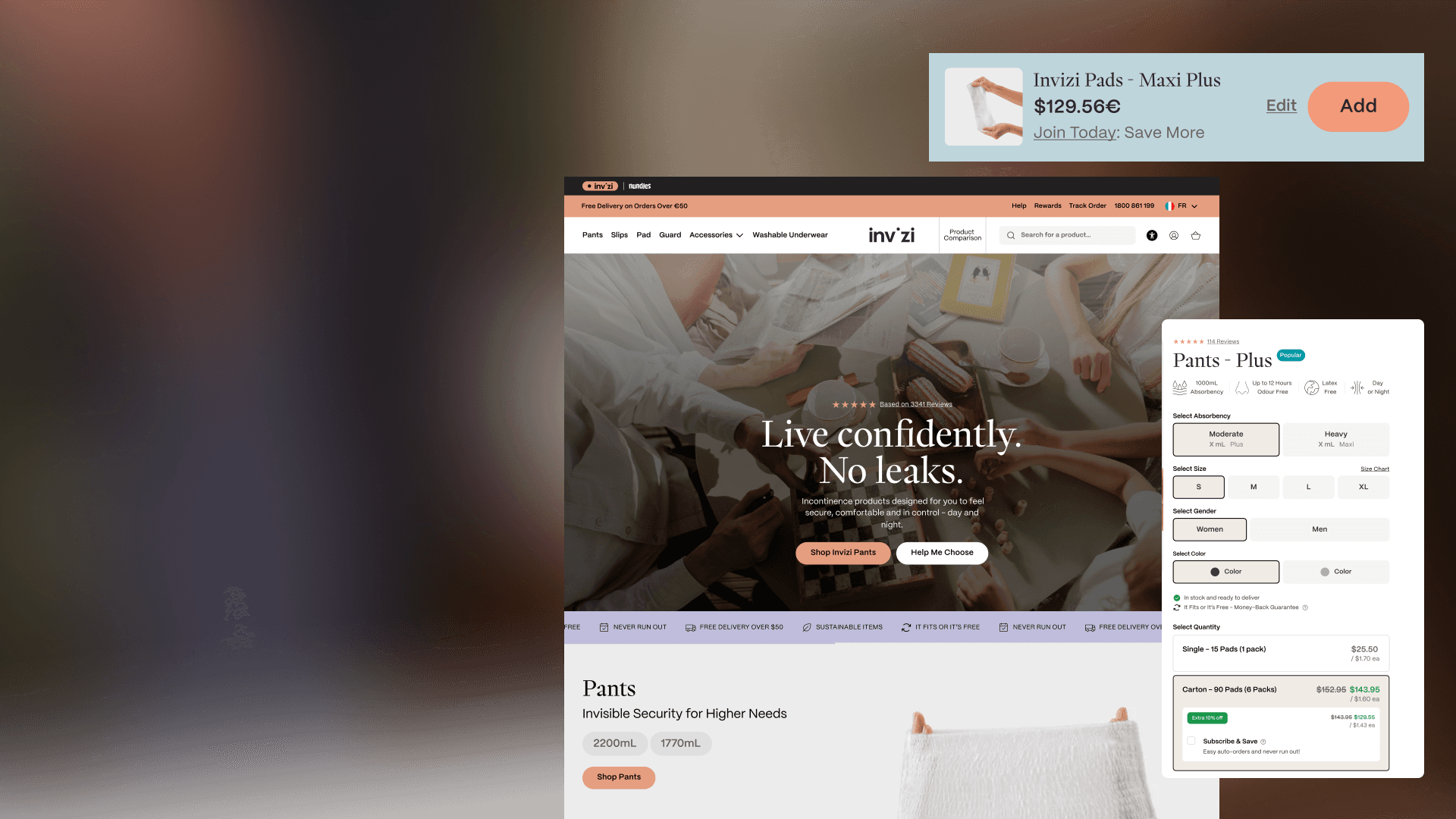
THE INTRODUCTION

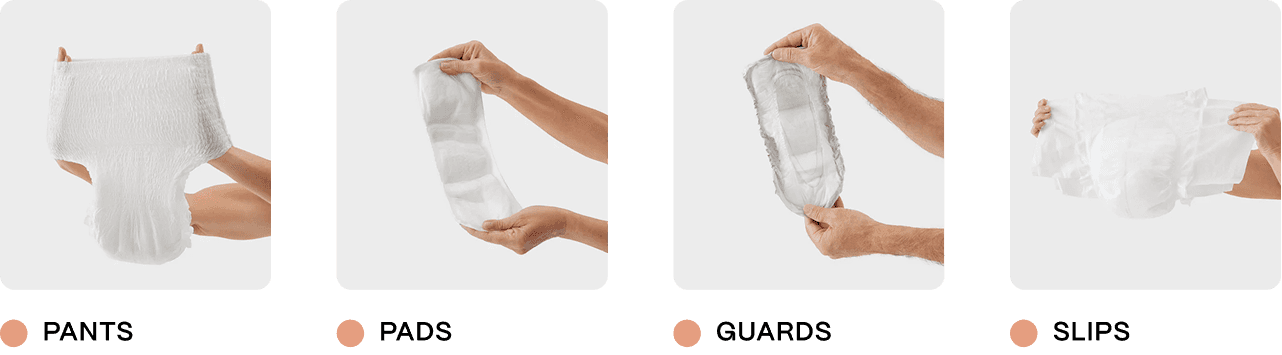
Currently, Invizi holds market in the AU, EU, and UK.
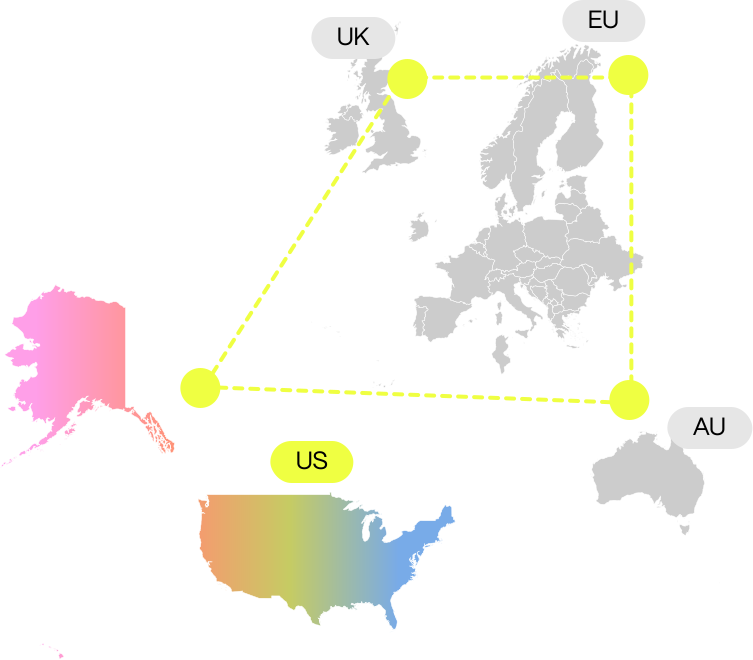
HIGH LEVEL CHALLENGE

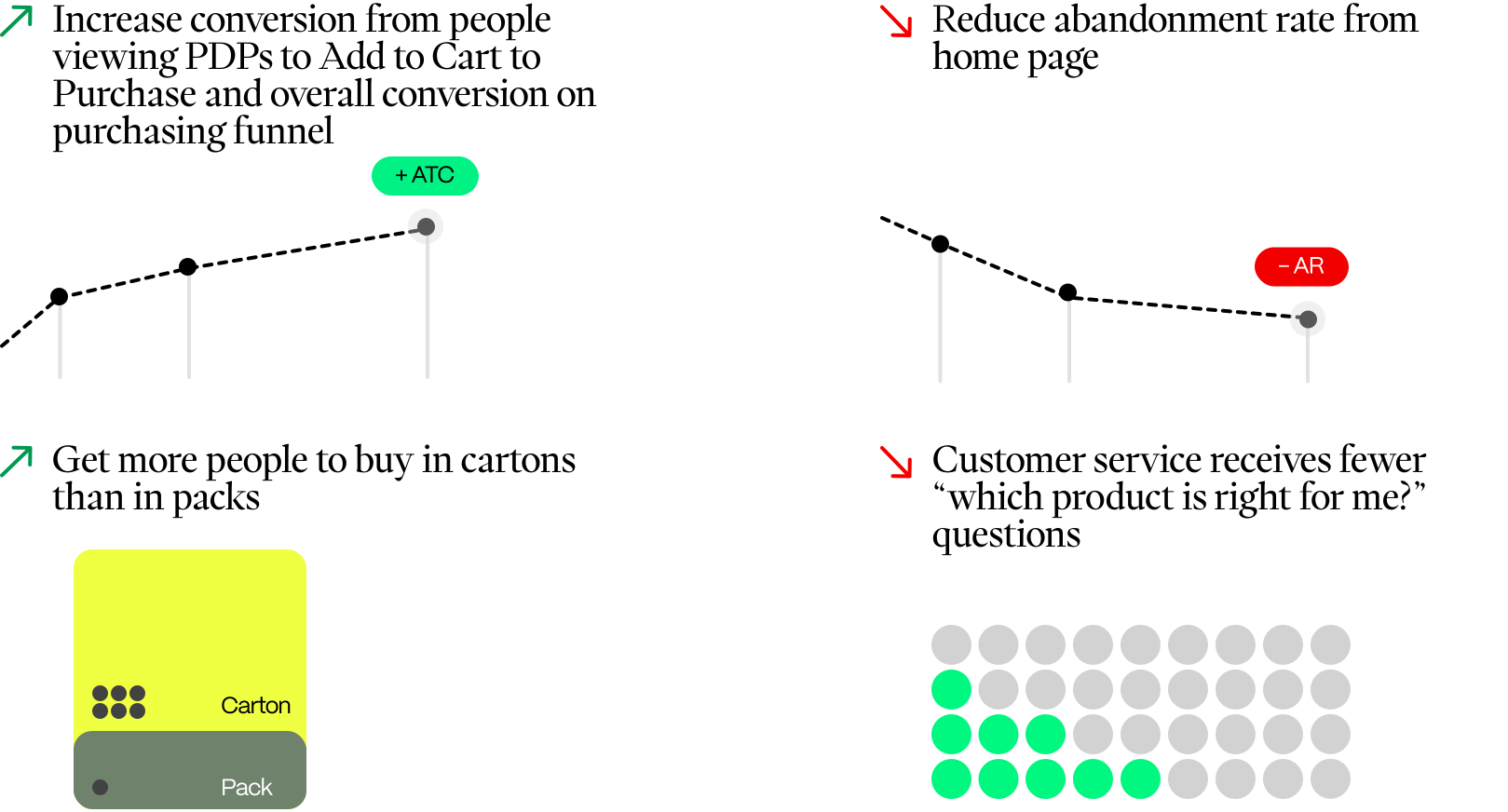
BUSINESS GOAL
USER GROUP
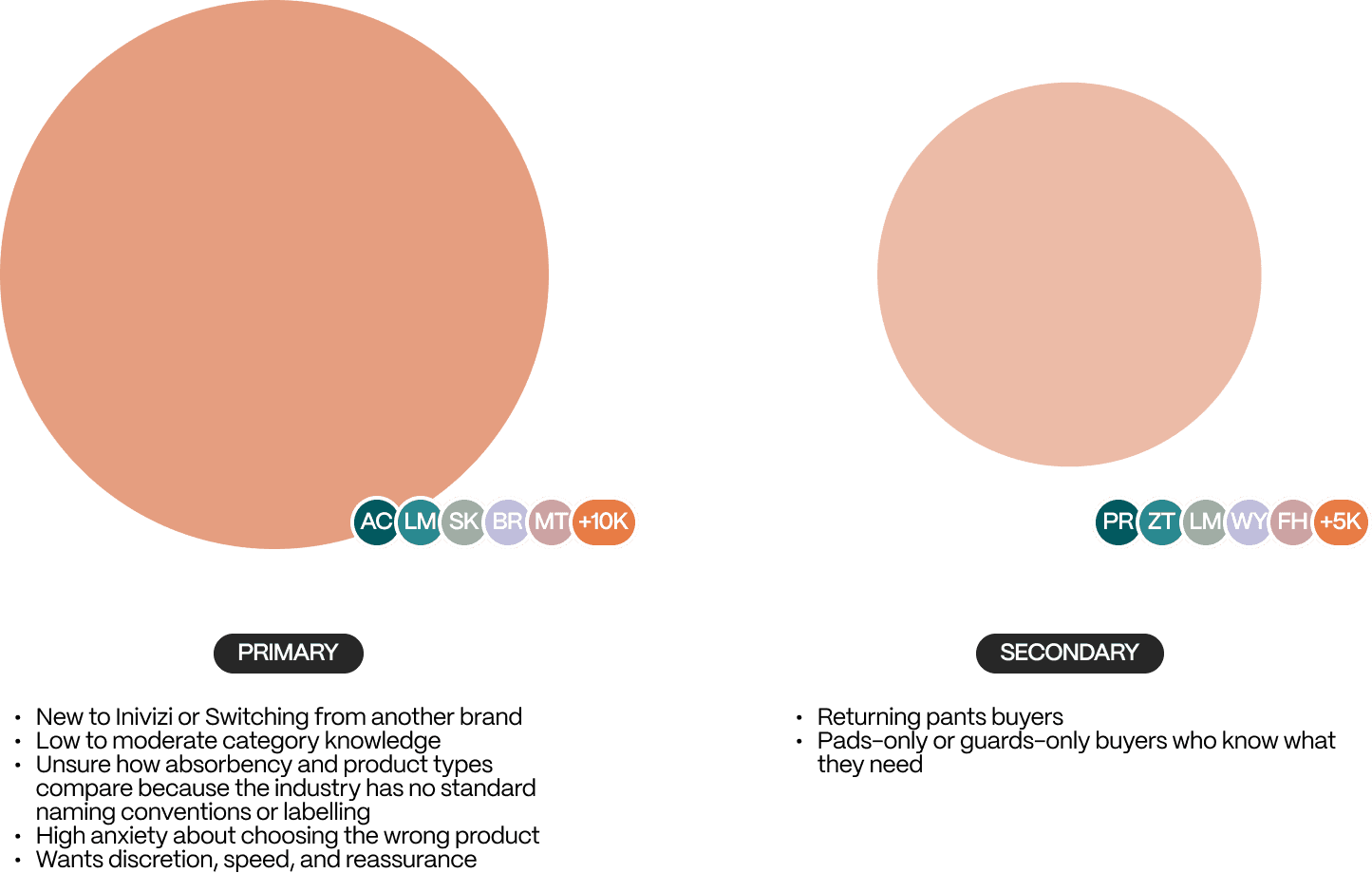
Therefore, our primary user group focus is based on the problem space and business goals as defined by the team are users that are new to Inivizi or switching from another brand. Our current customers are already purchasing from our site. We need stronger storytelling to gain new customers and less abandonment across their purchasing journey.
With our secondary user group, we still want to keep in mind of our existing customers so we retain and do not lose to other competitors.
RESEARCH
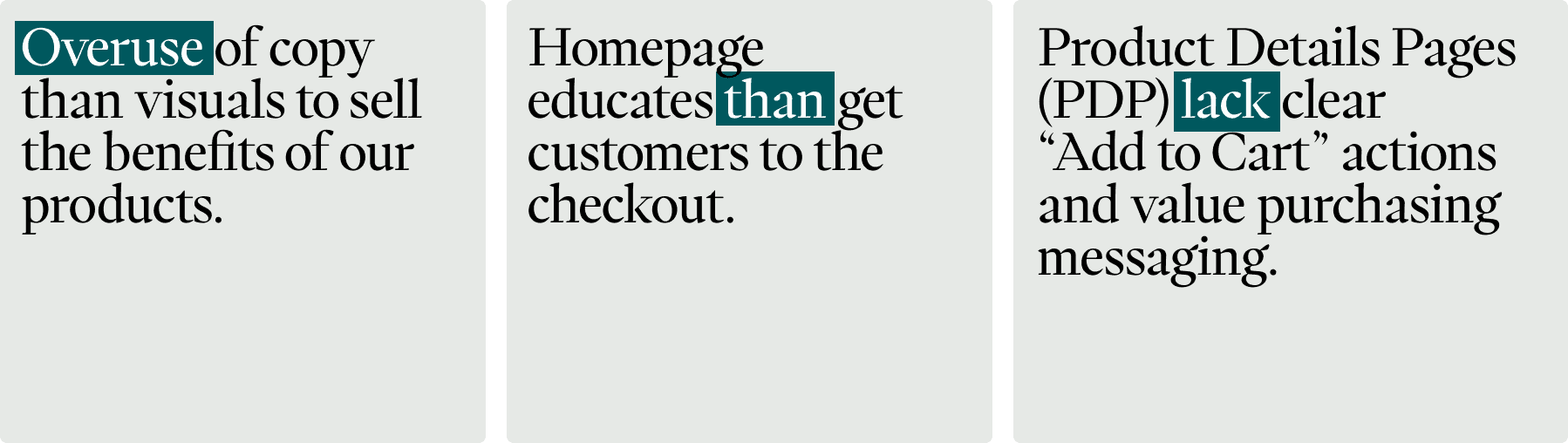
My primary goal as a freelance designer was to design from the insights discovered from the team. The team had done research on challenges with the existing Invizi site prior that shaped the challenges we want to address. It was still important for me to understand the research done deeply so I reviewed and analyzed the key pain points. This is what I found from the team's discover:
EXPLORATIONS
To shape my design iterations, I used a set of design hypothesis for each painpoint to guide the direction (than in just using hypothesis in research).
PAINPOINT 1
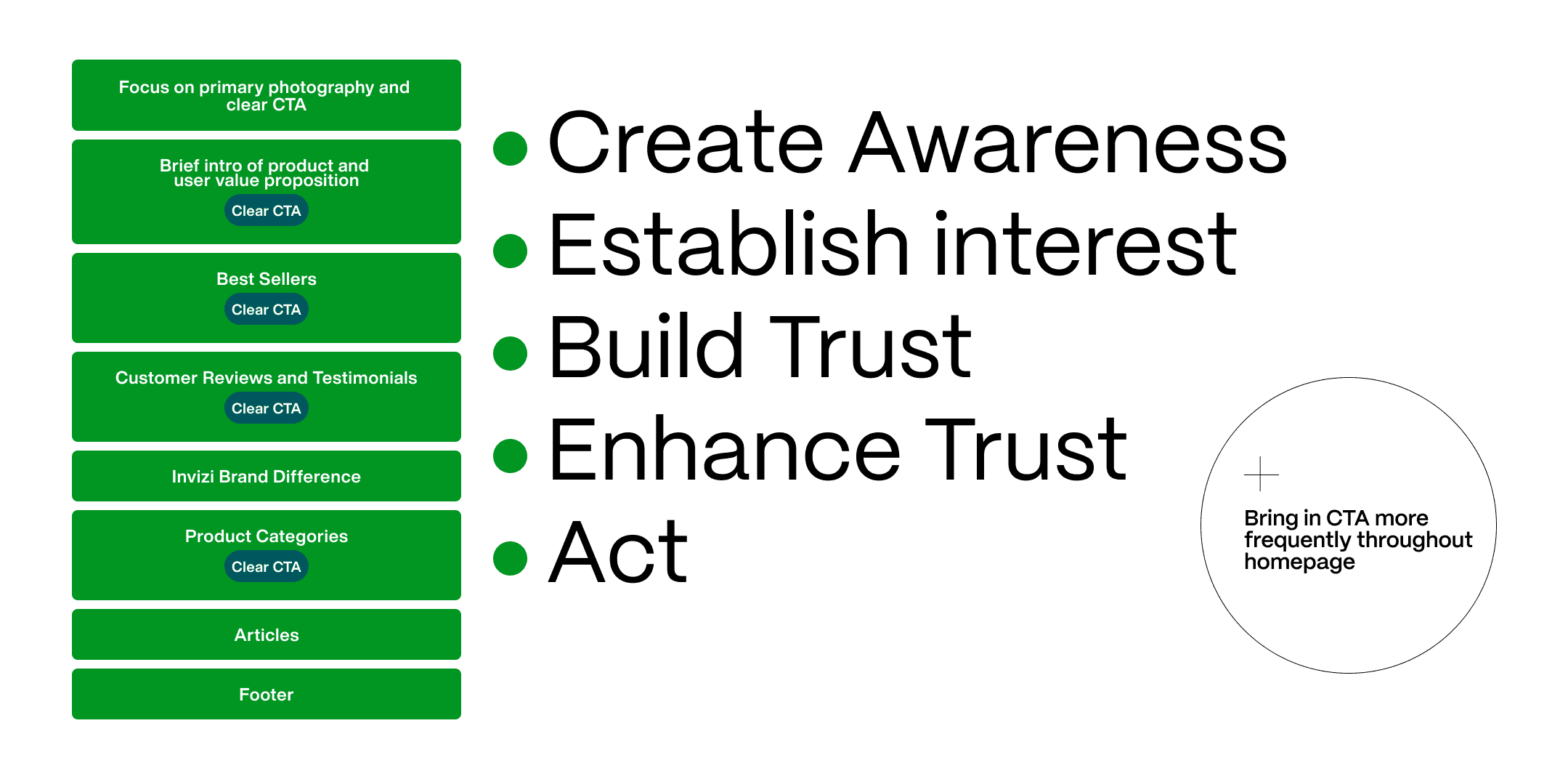
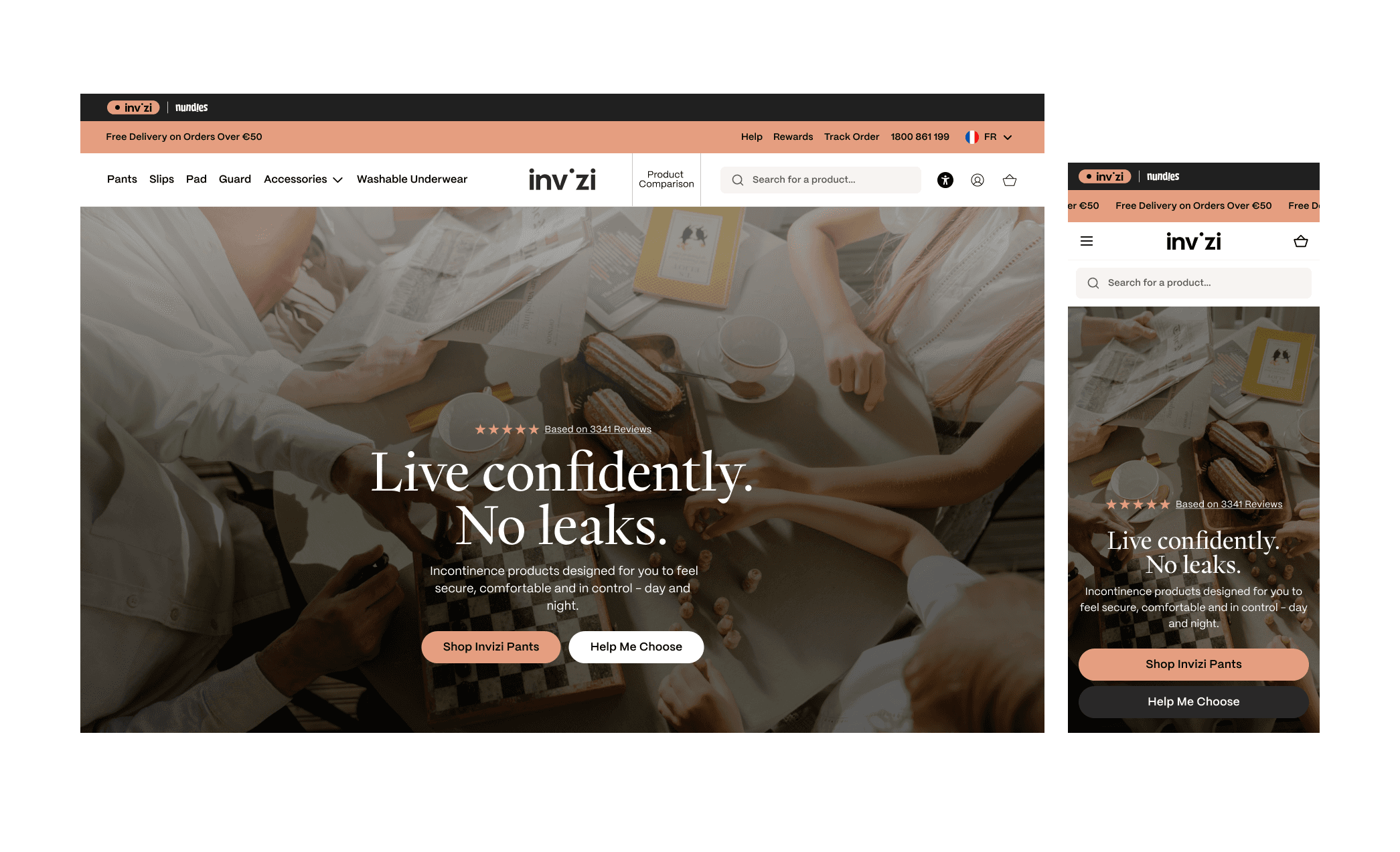
The lack of storytelling and volume of copy on the homepage leaves it feeling fragmented and takes customers a long time for them to find why our products are good.
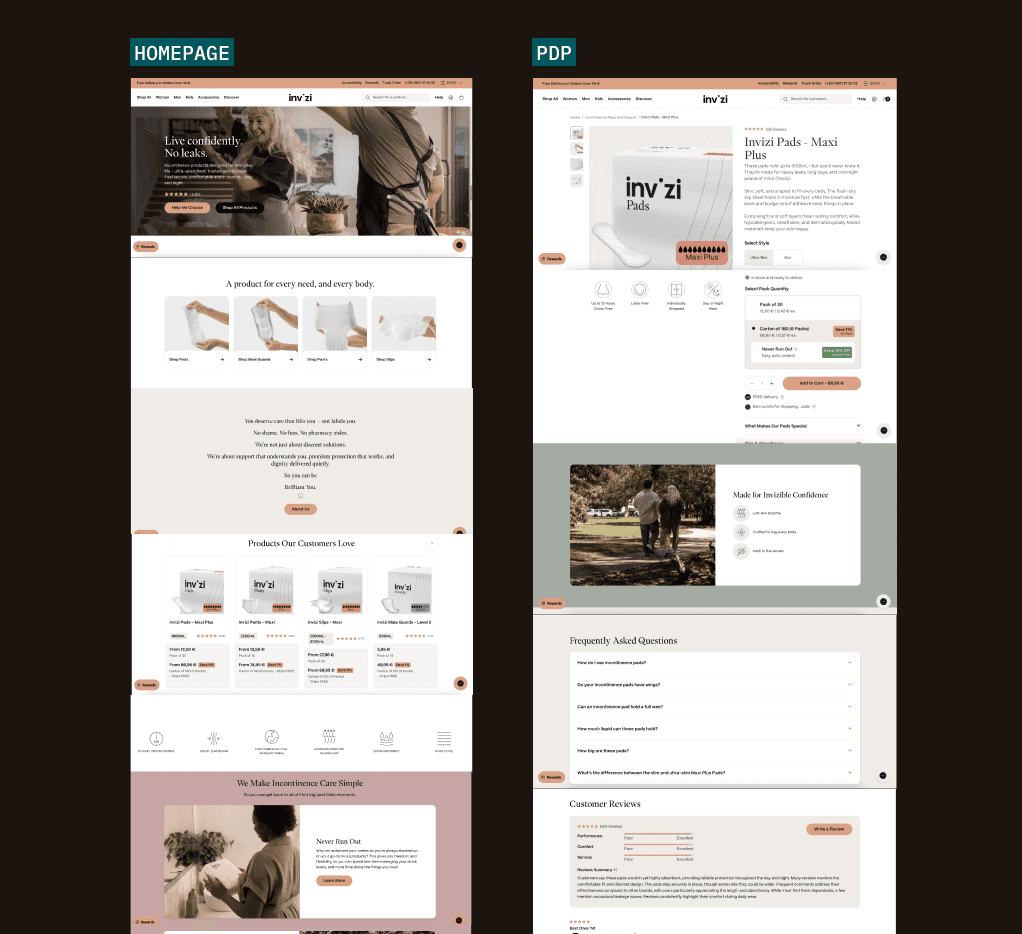
I analyzed Invizi's existing homepage information architecture and cross compare with user's mental modal with making decisions of whether or not it drives them to opening to the Product Details Pages (PDP) where purchases and "Add to Cart" happens. This is what I realized were at fault with the existing information architecture and flow:
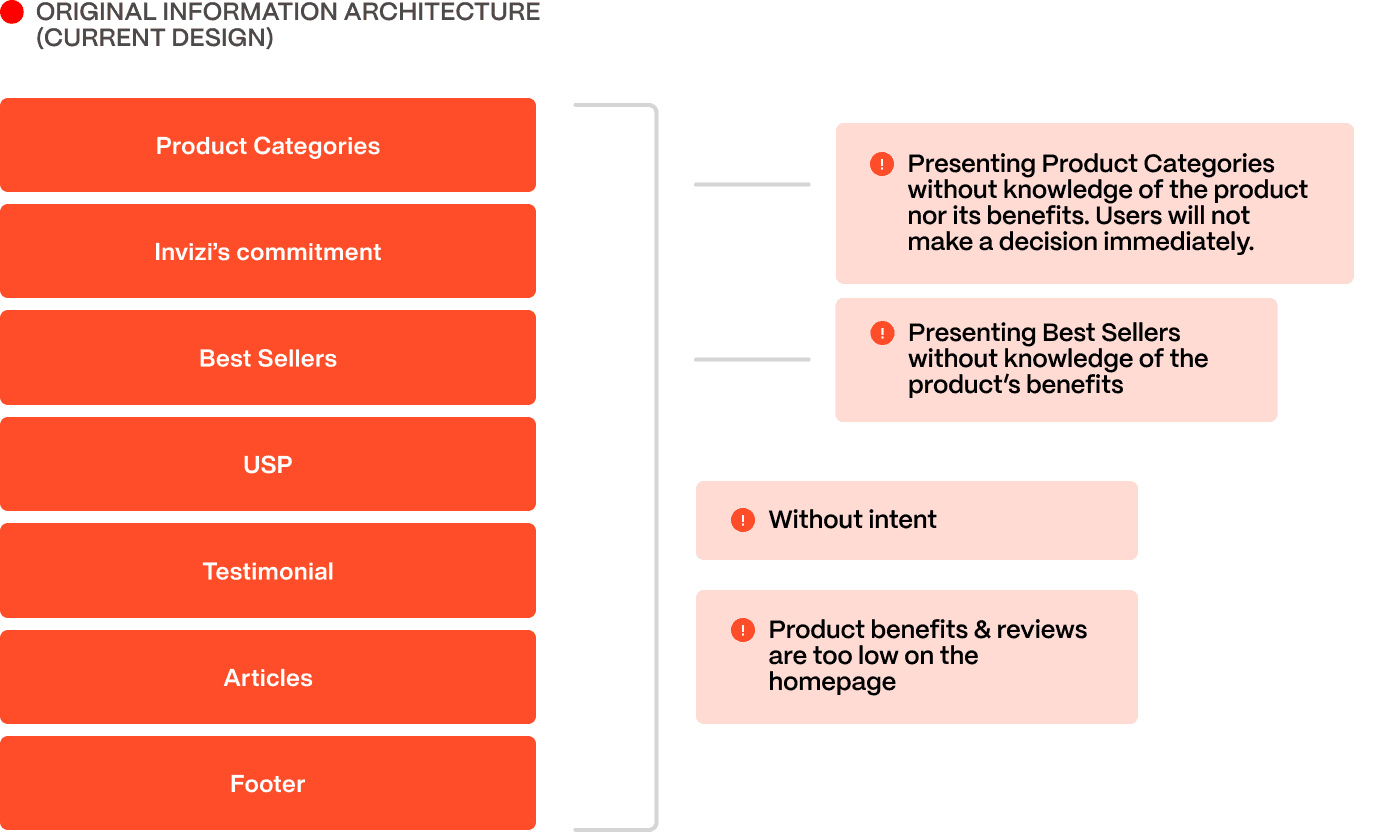
I therefore, redesigned the information to the following flow below. It does the following:
PAINPOINT 2
1%
of users reach the bottom of our PDPs.
25%
users on mobile do not scroll to bottom of PDP
Plus, our PDPs simply go from images > descriptions > pricing > atc > reviews. There is no brand experience under pricing that engage and build trust with users.
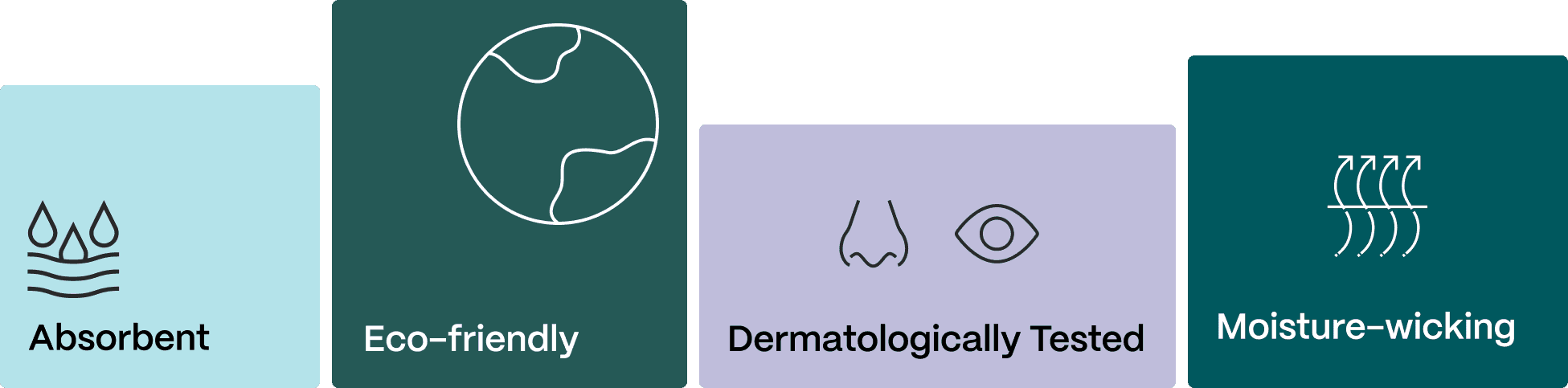
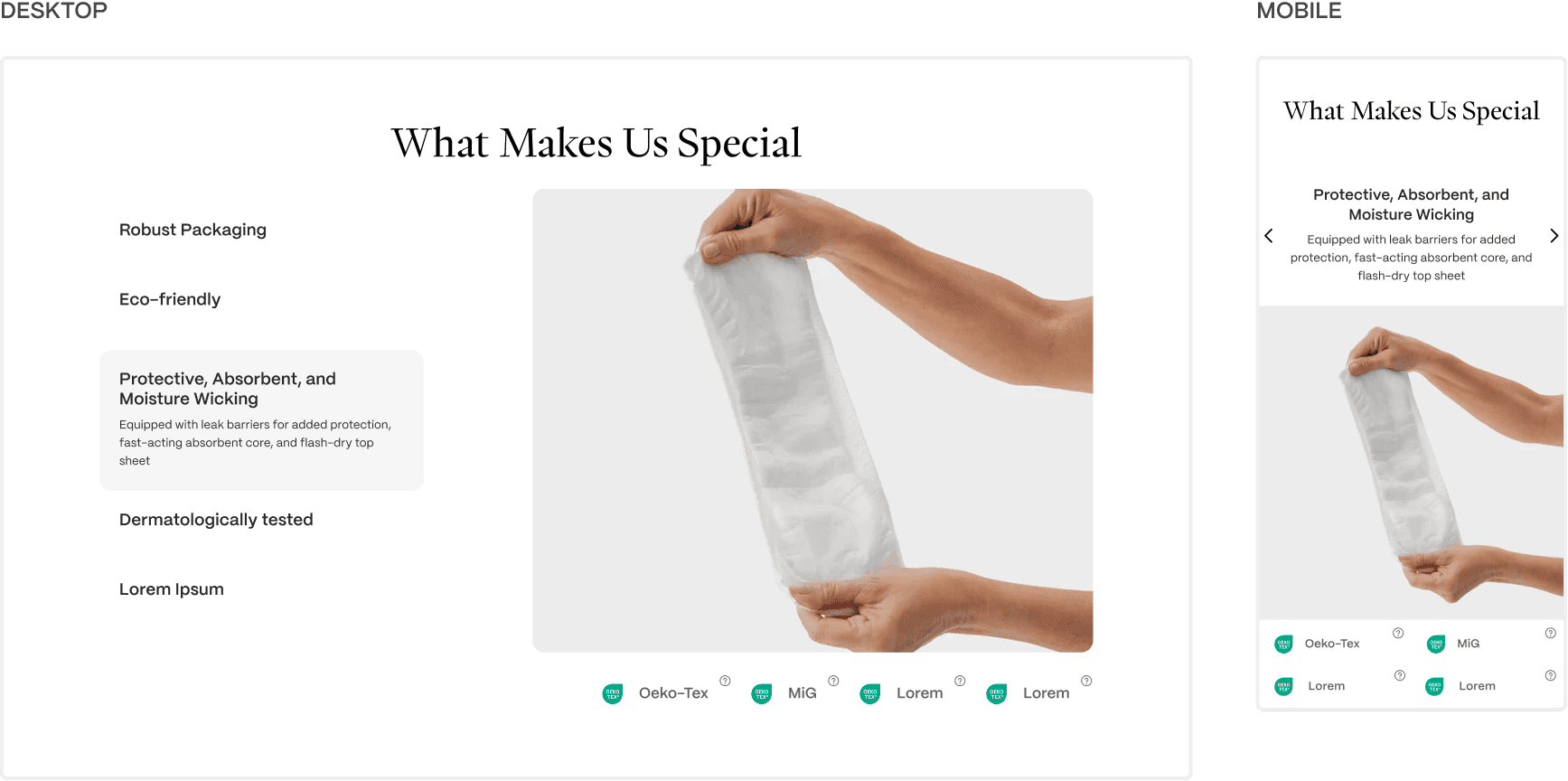
I drew inspiration from skincase brands to shape how we might showcase Invizi's incontinence product benefits (absorbency, moisture-wicking capabilities, protective barrier, and sleek fit) because I knew skincare brands leverage diagrams often to demonstrate their product's ingredients. I explore the following designs and why I decided to not move foward with them:
Not as scalable onto mobile
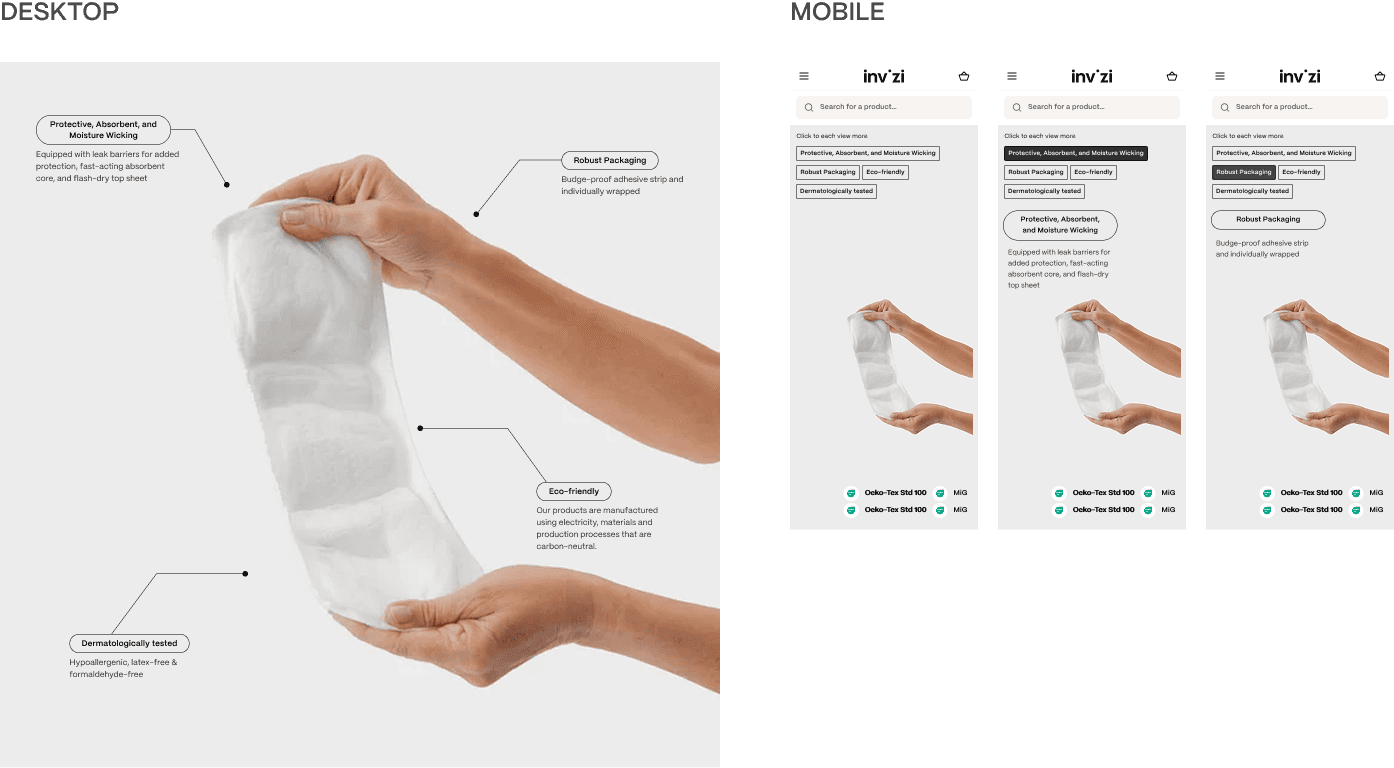
Blocks product imagery
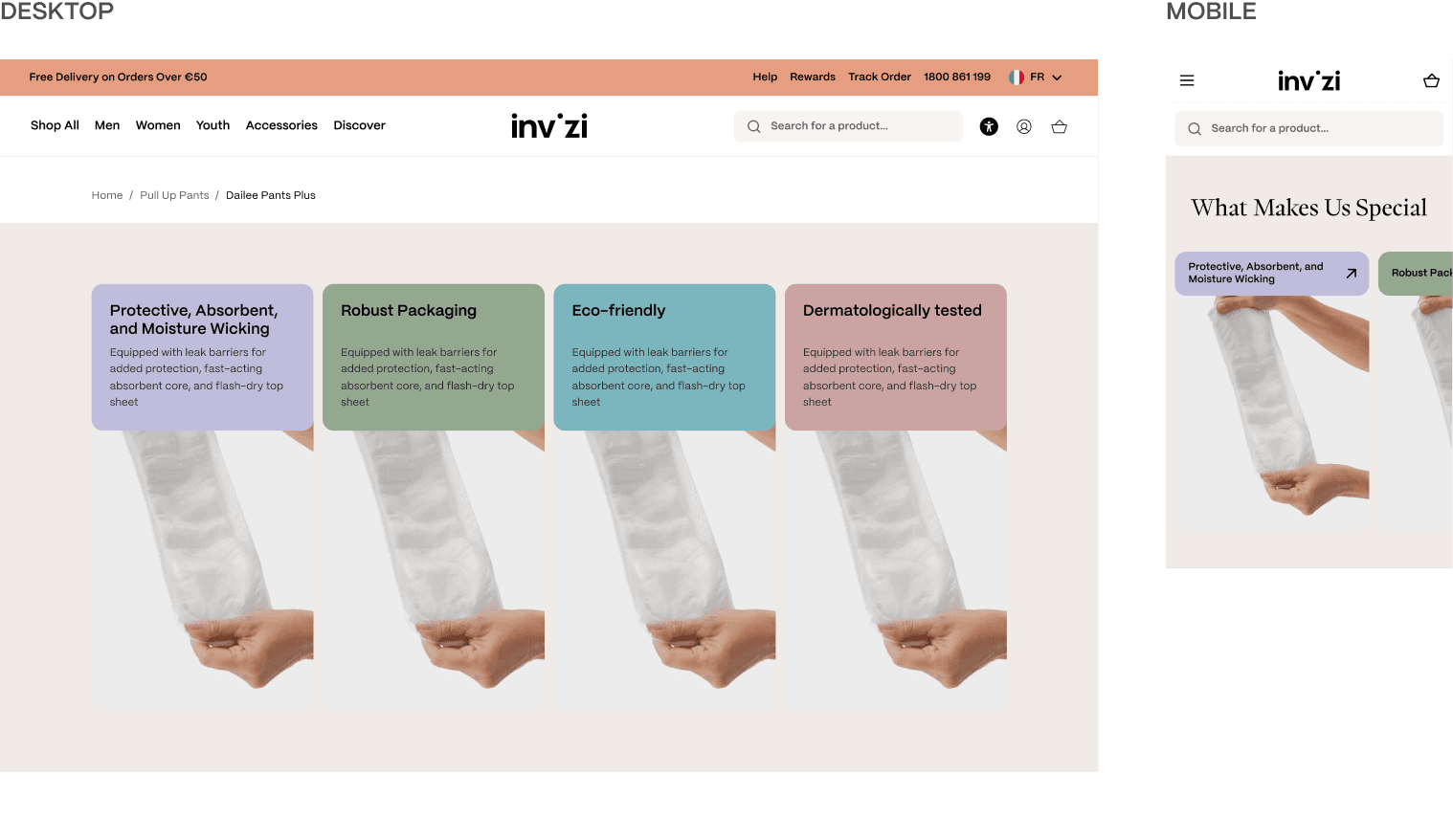
I eventually landed on this design below.
Highlights Product Photography / Video Assets Well, users interaction is easily accessible, and space for Product Certificates
PAINPOINT 3
41%
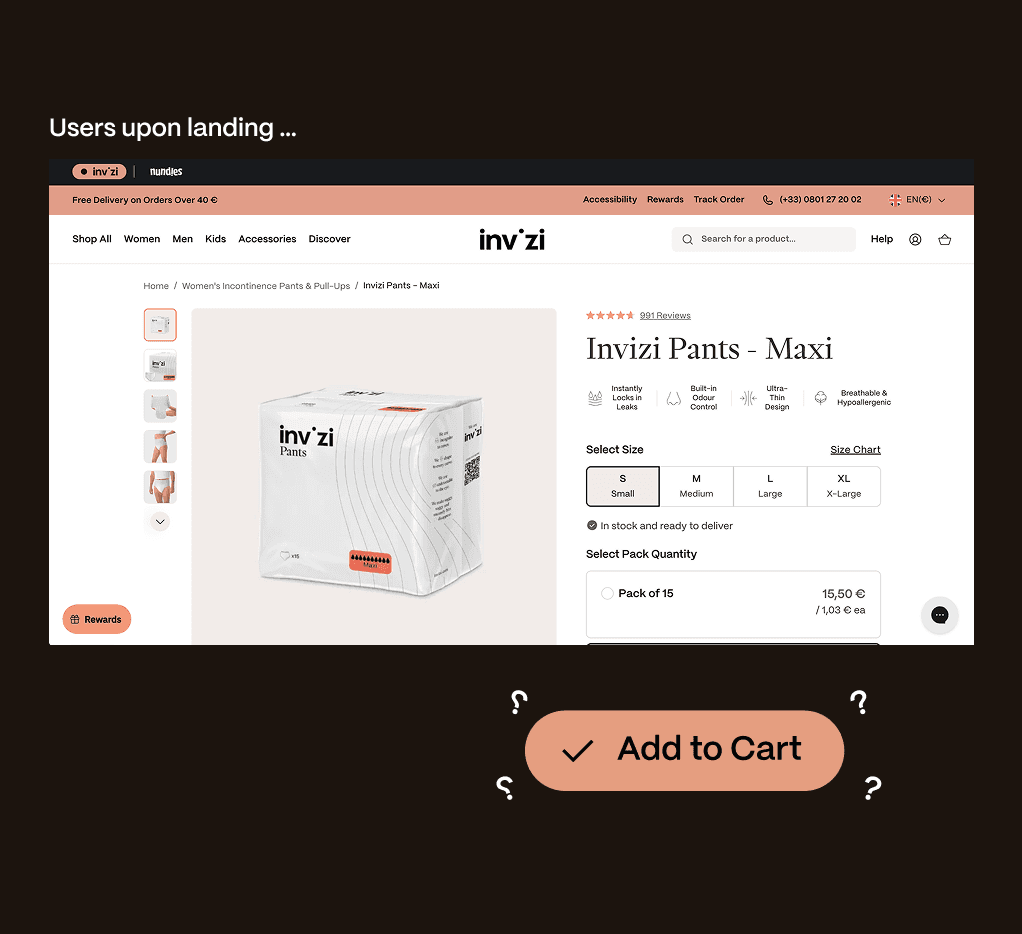
of users don’t add a product to their cart once they’ve seen a product page
<50%
will ever see the price per pack or the ATC button.
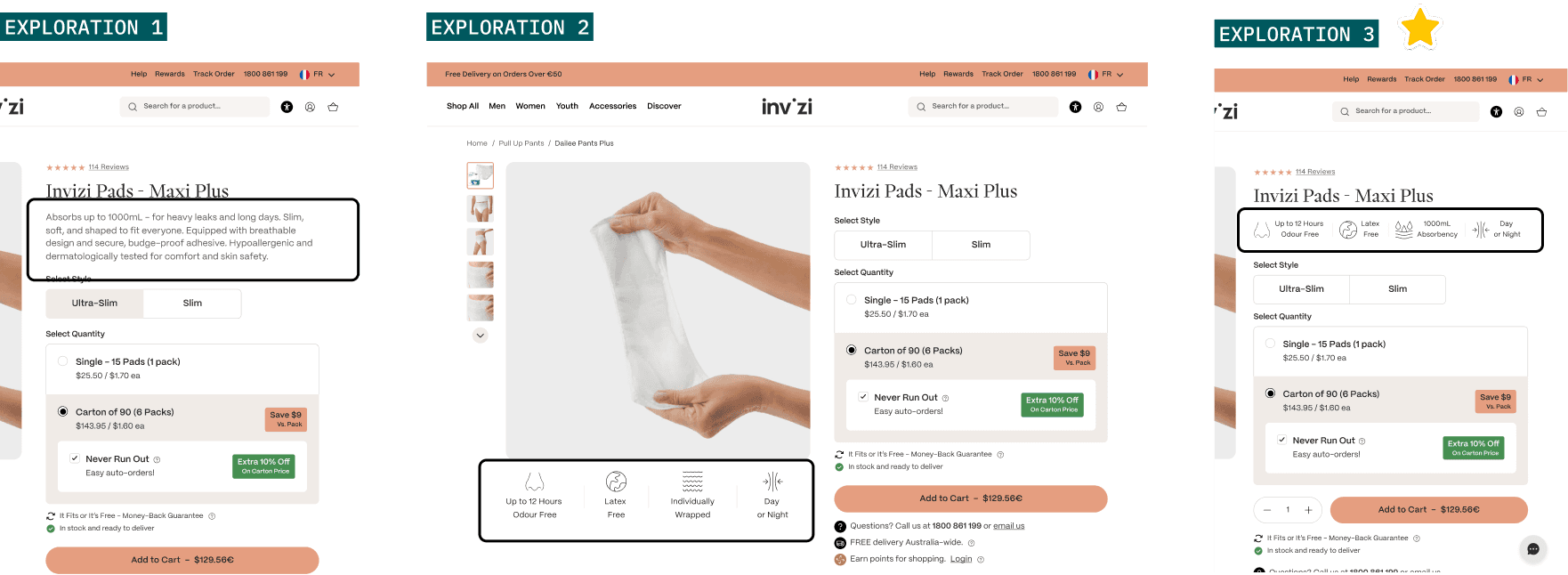
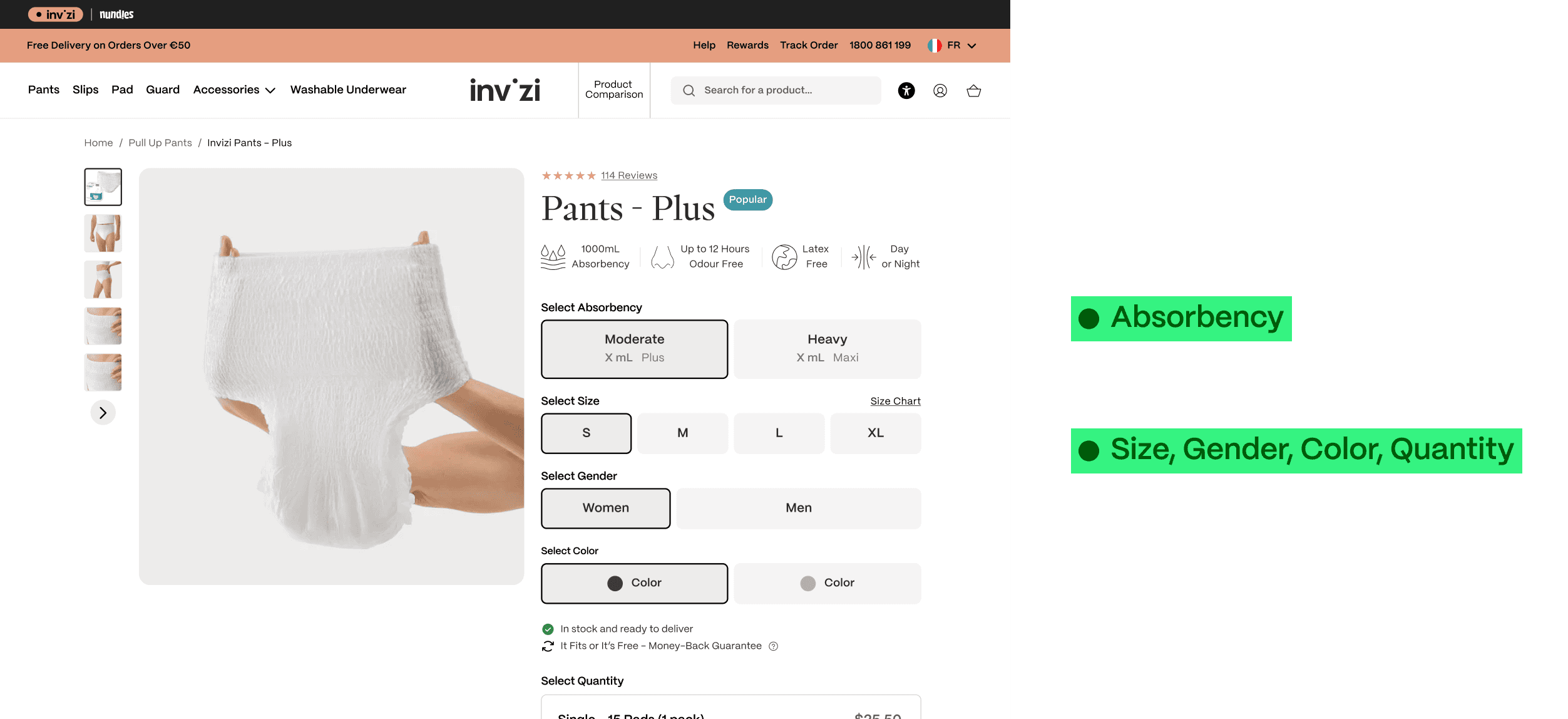
Unique Selling Position (USP) Placement on PDP
For the first set of explorations, I explored where we can repurpose the USP or benefits of the product on the PDP page. It remains on top and early on of the PDP page as it was originally, but can be repositioned elsewhere.
I eventually landed on exploration 3 because easier to consume than via text and is most apparent
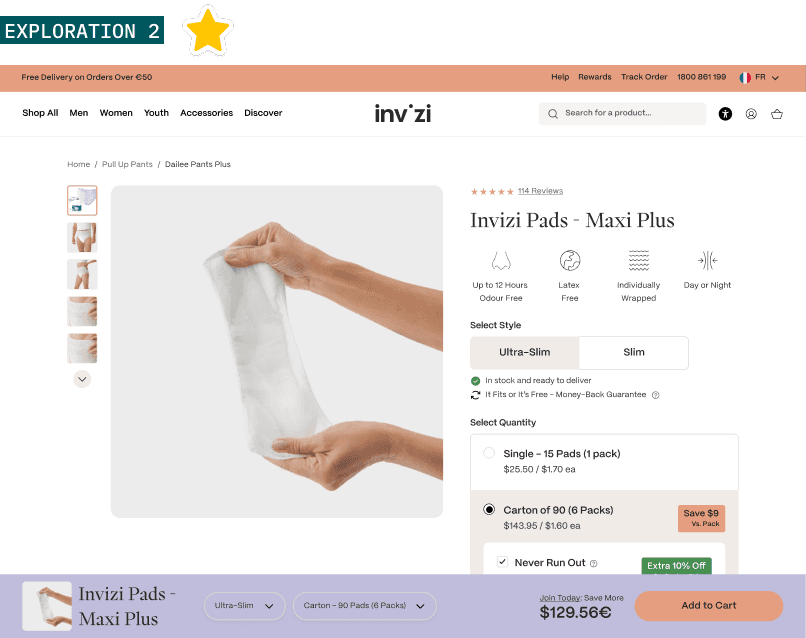
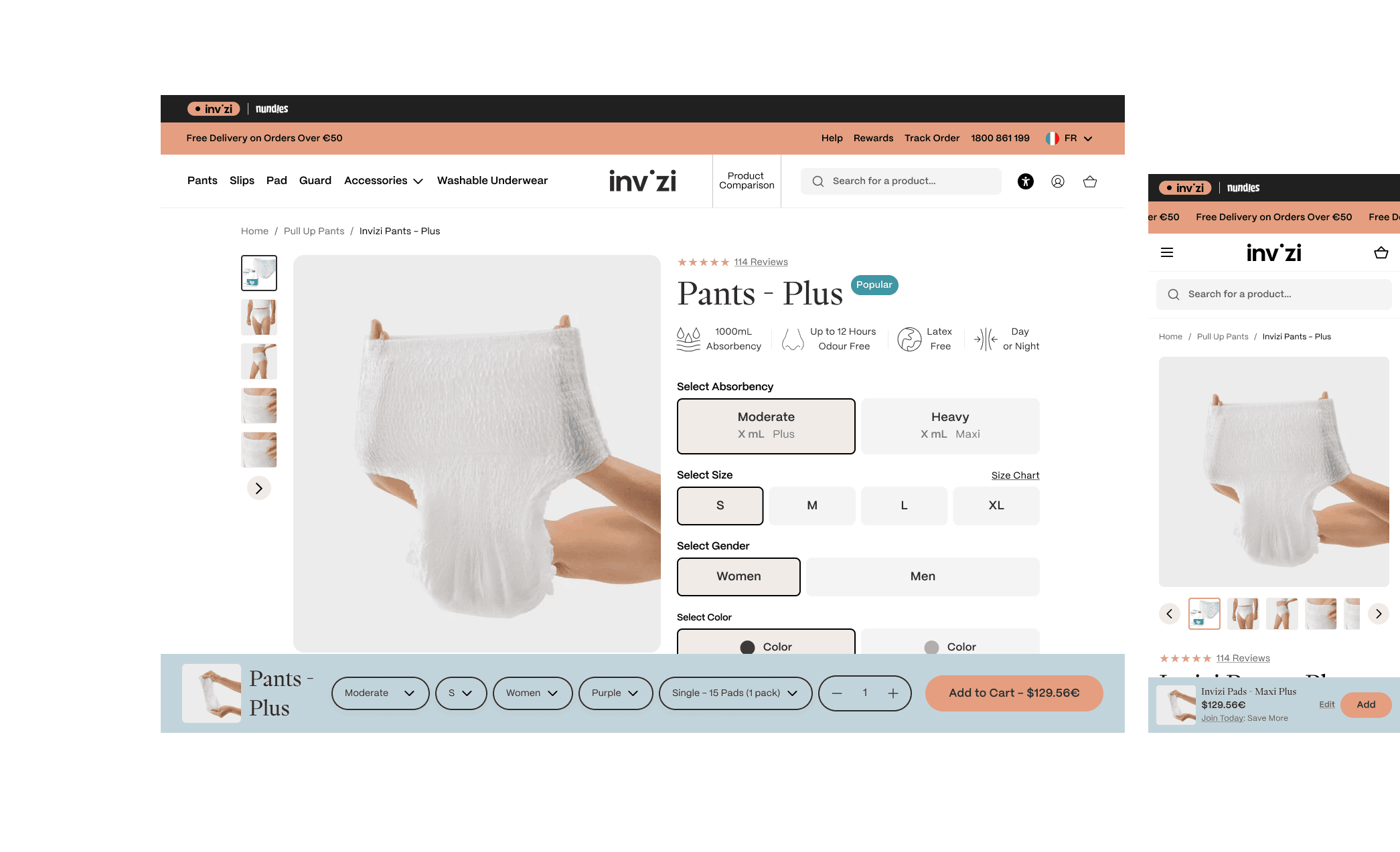
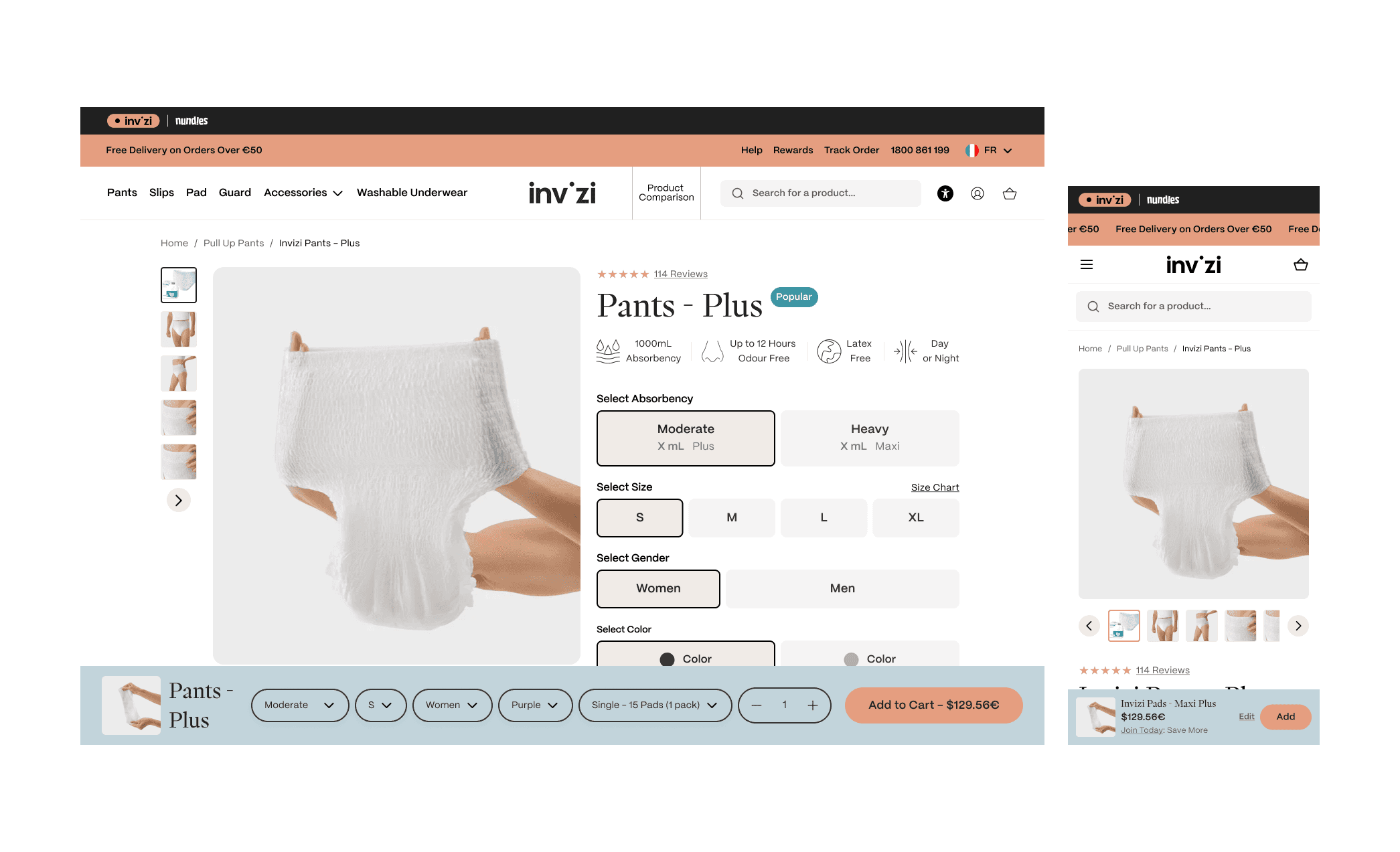
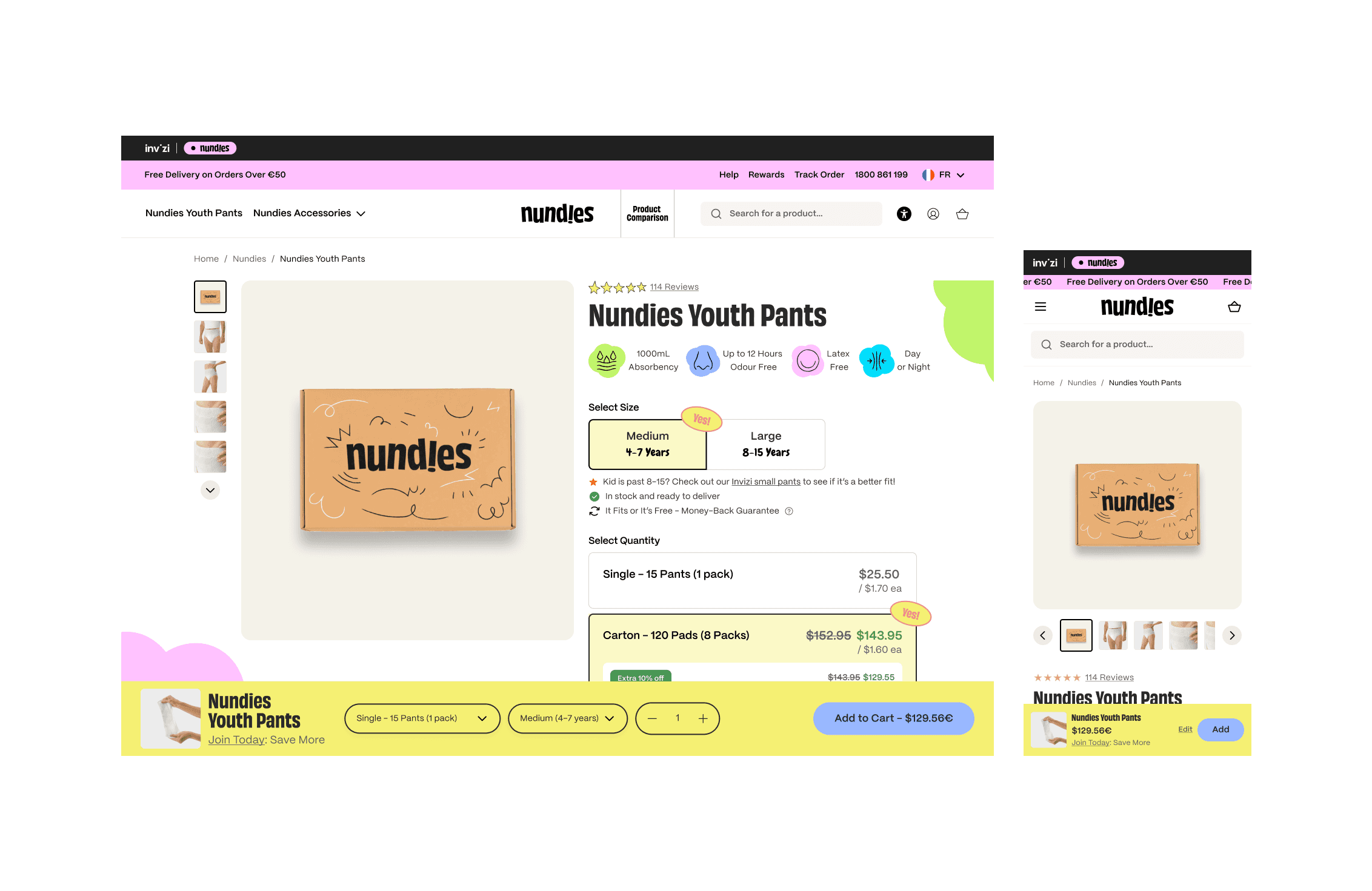
Sticky Add to Cart
I then explored how we bring a Sticky Add to Cart feature into our PDP.
Hides key product information
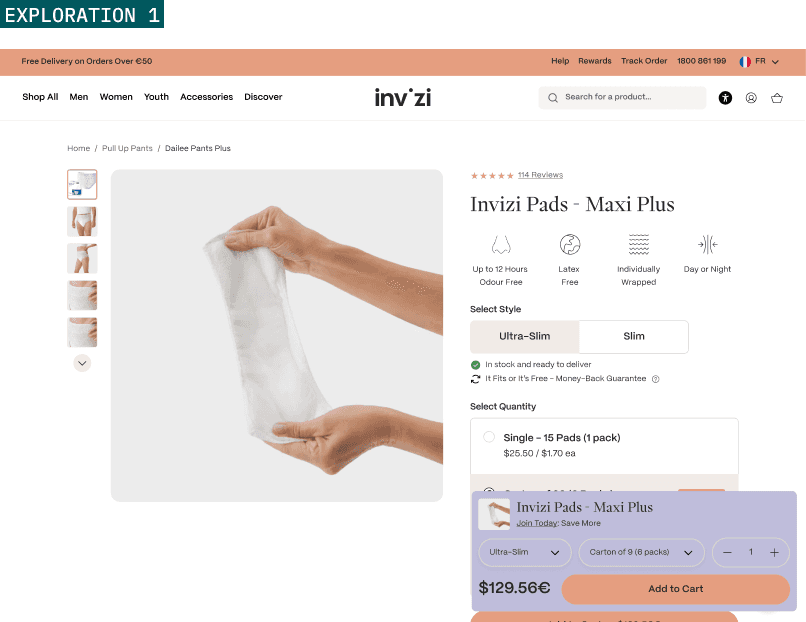
Key product information is more visible and scalable to adding more product selections in the future
PAINPOINT 4
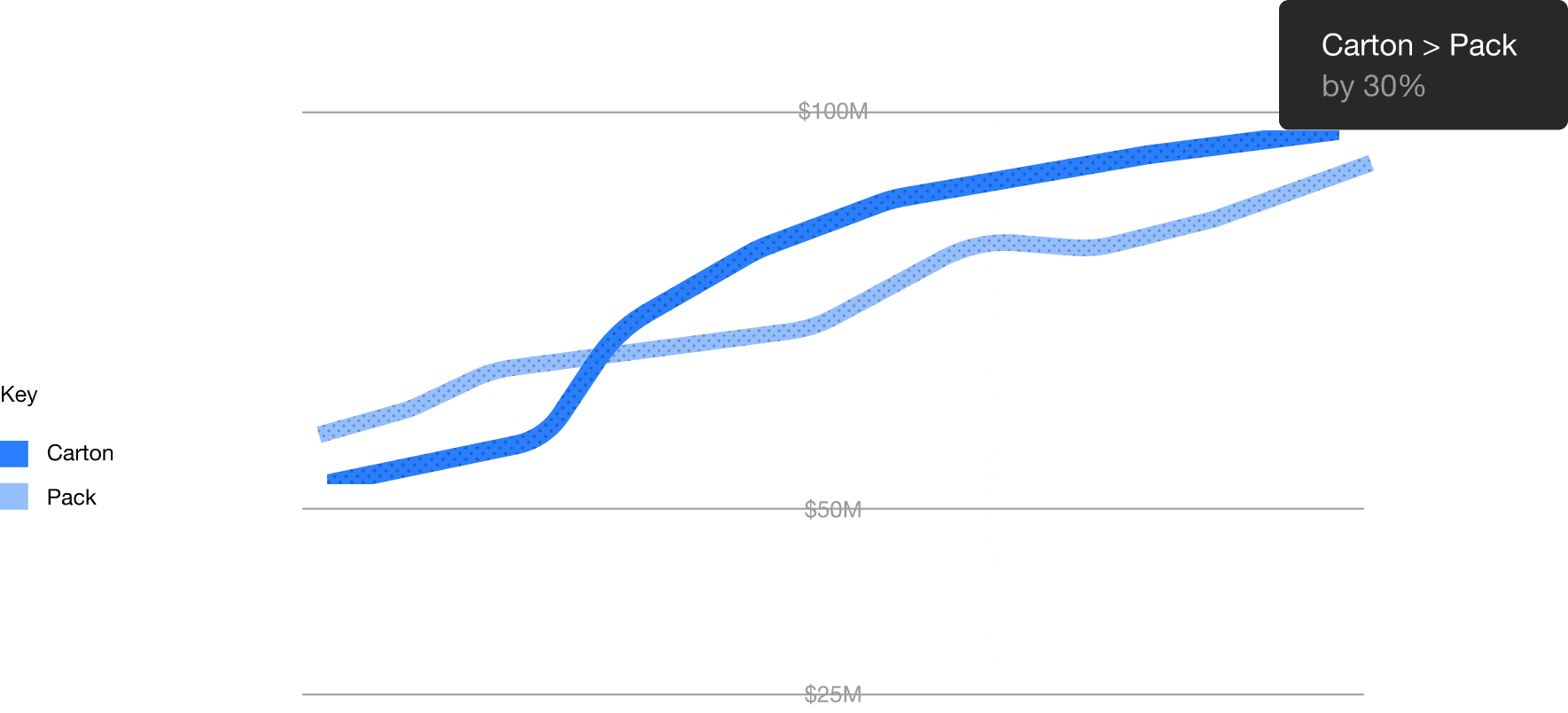
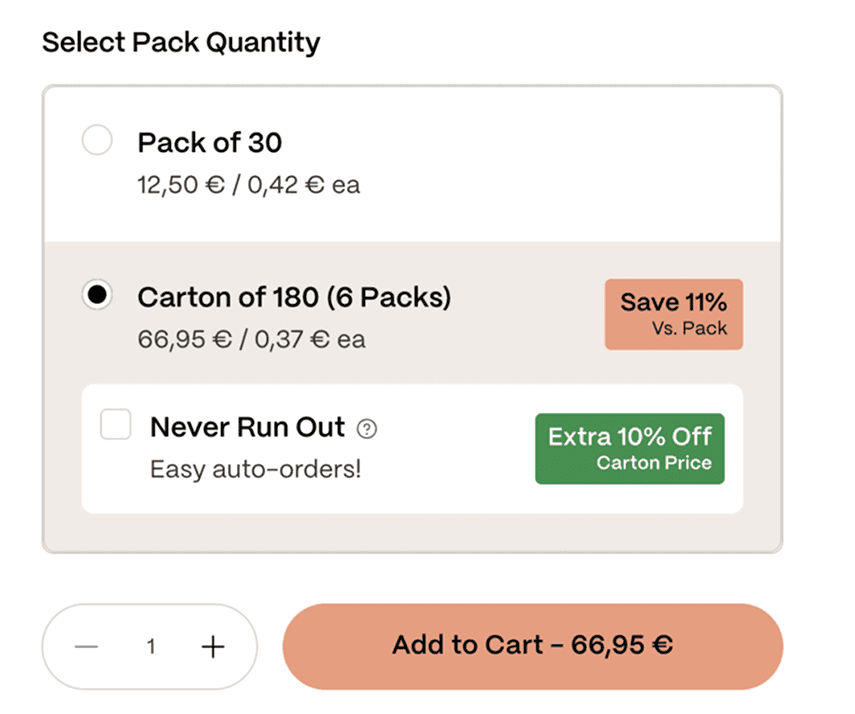
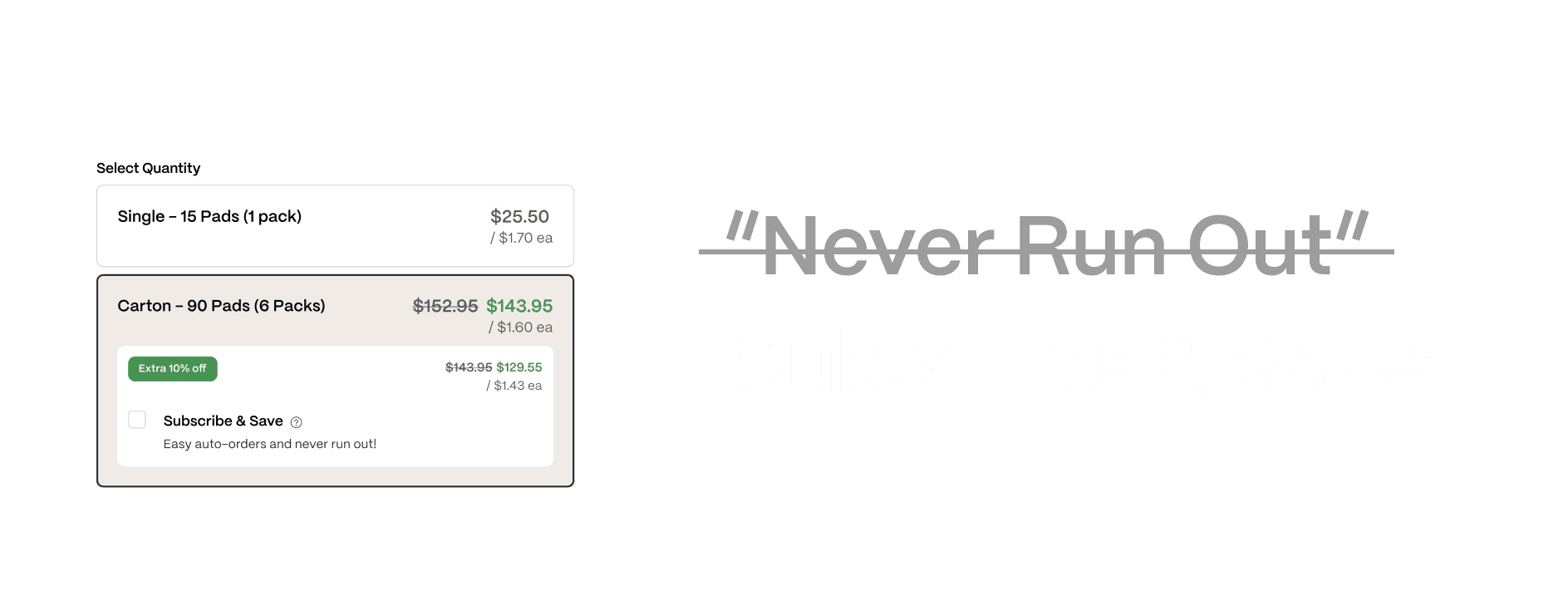
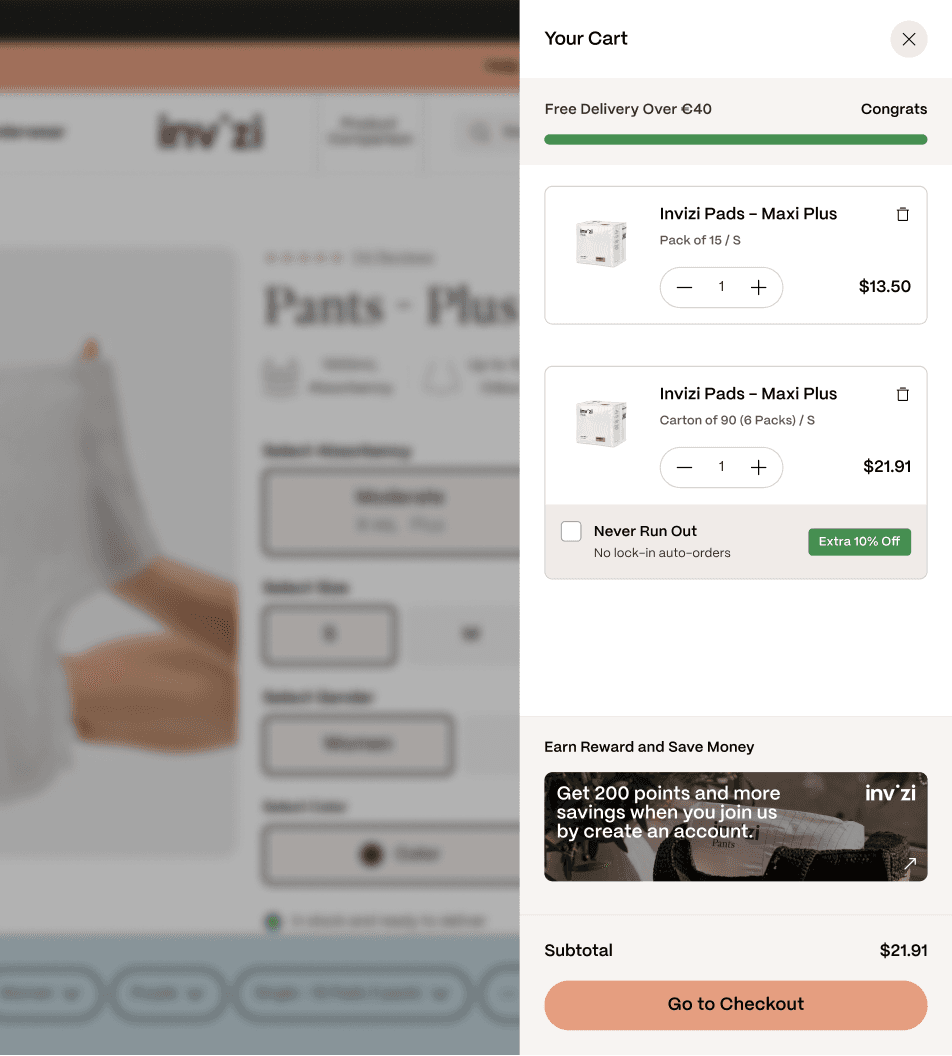
We have a lot of customers still buying packs than cartons.
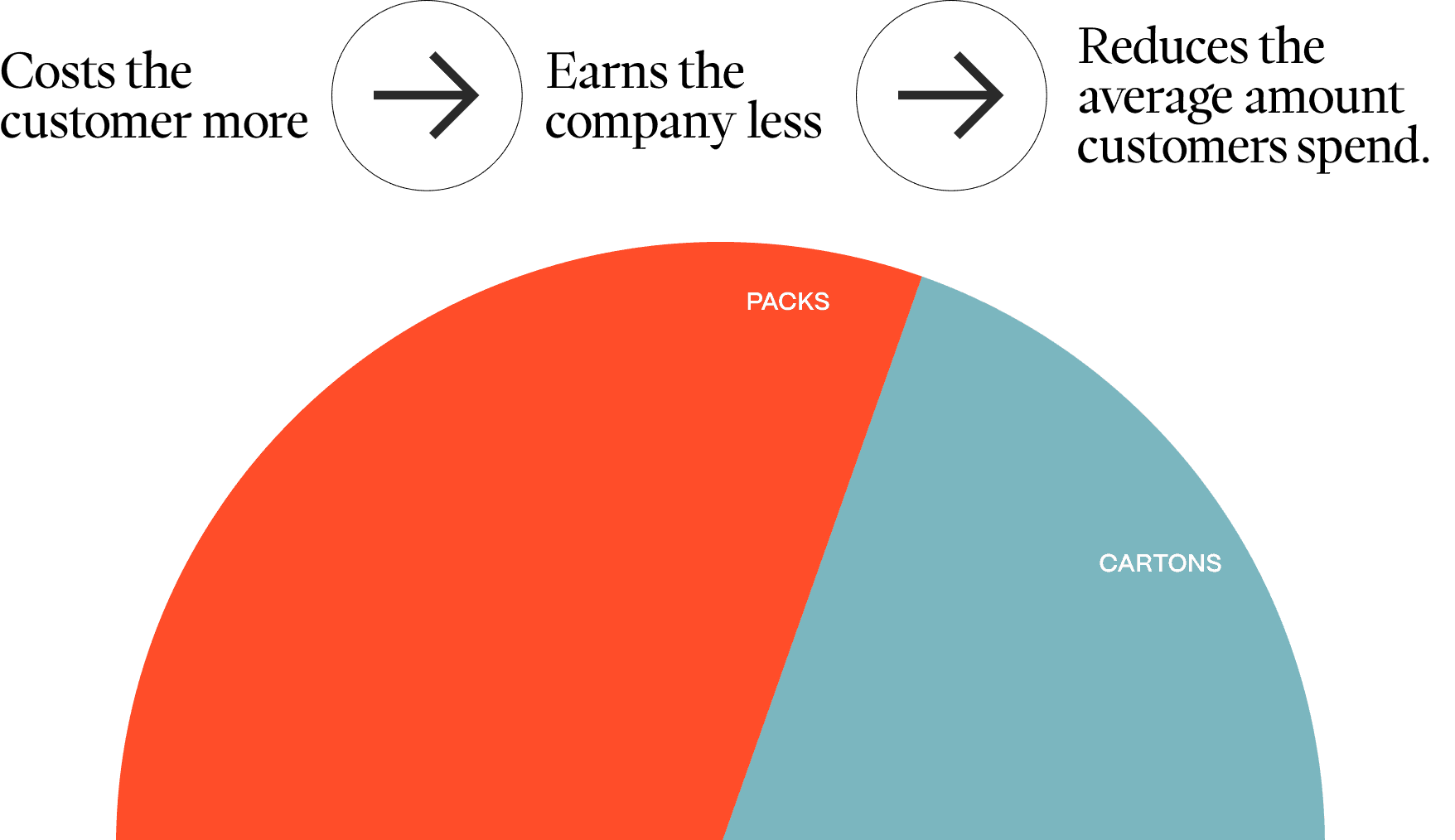
What we want instead:
Original Designs
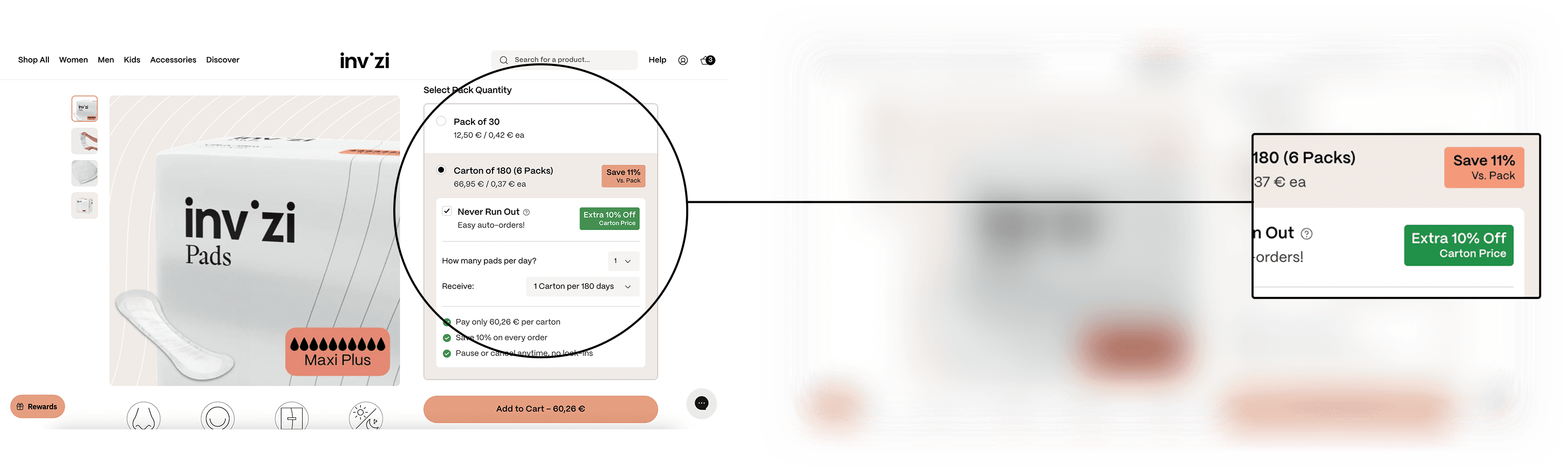
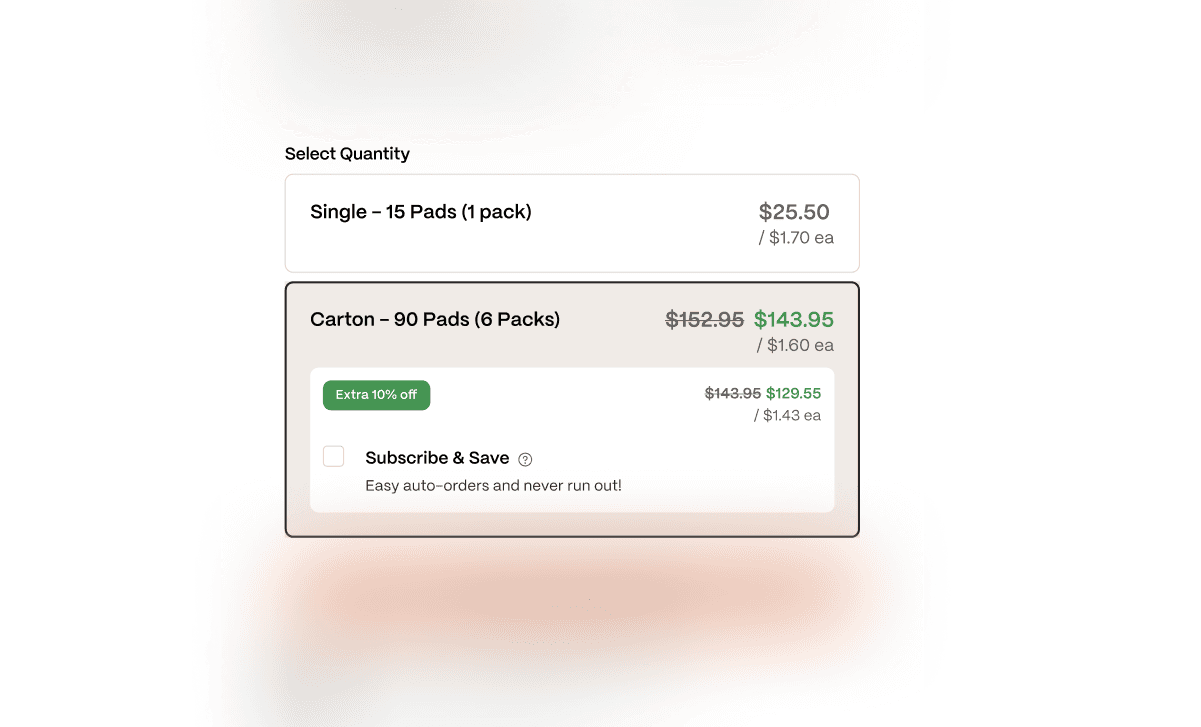
First, I made changes to visual foundations across the quantity container that were simple changes but high impact. But, I knew I wanted to think beyond just making simple changes and push the design to break a bit more. These changes however were consistent across all the explorations made.
Let’s try to rethink beyond existing patterns
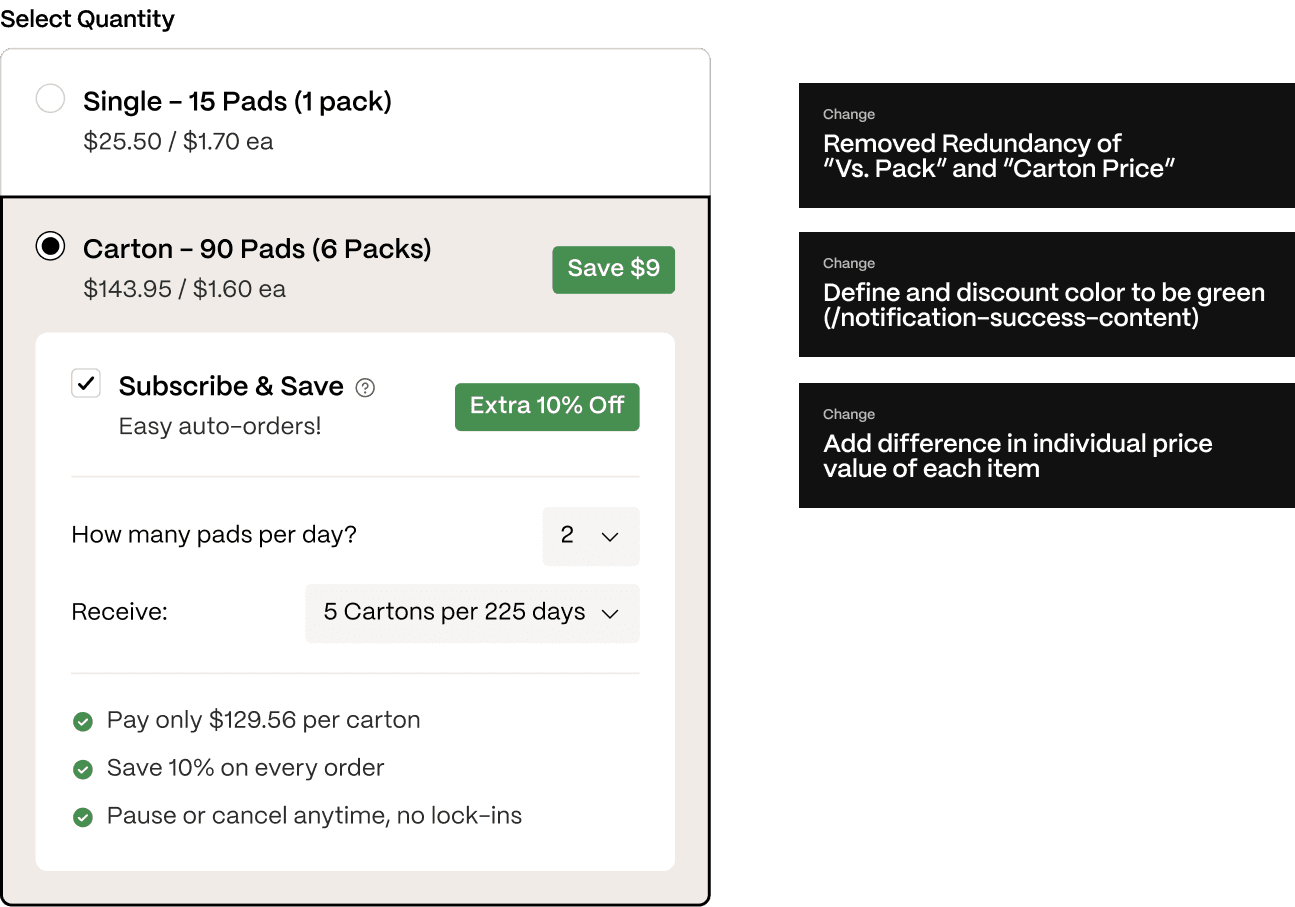
Visual imbalance
More prominent but it does not feel like a huge shift in UX impact, but can we push more?
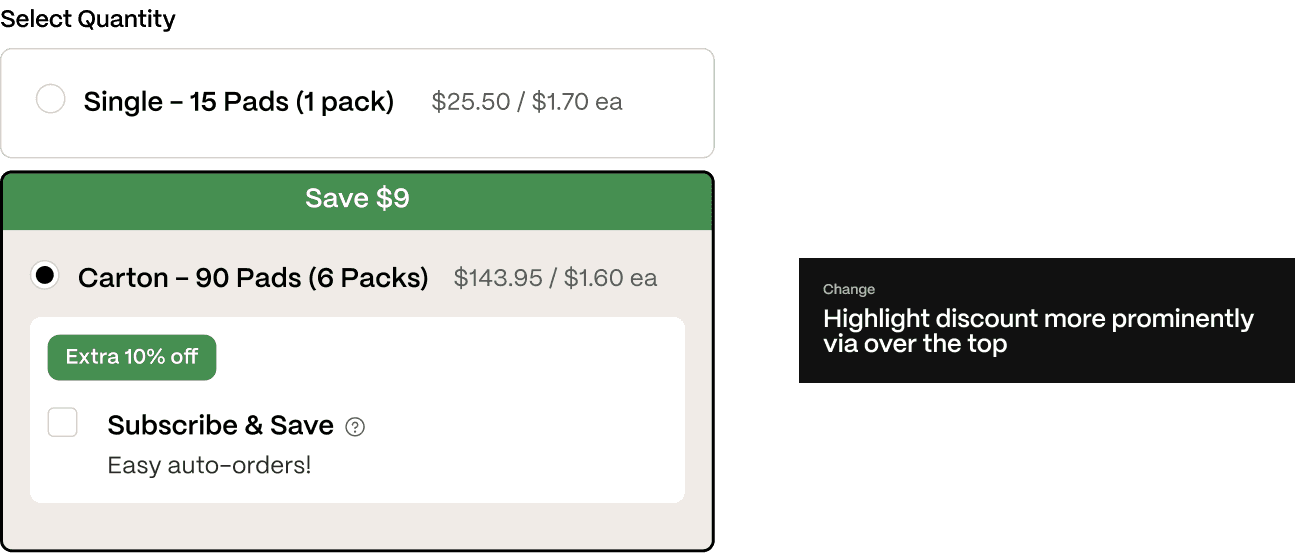
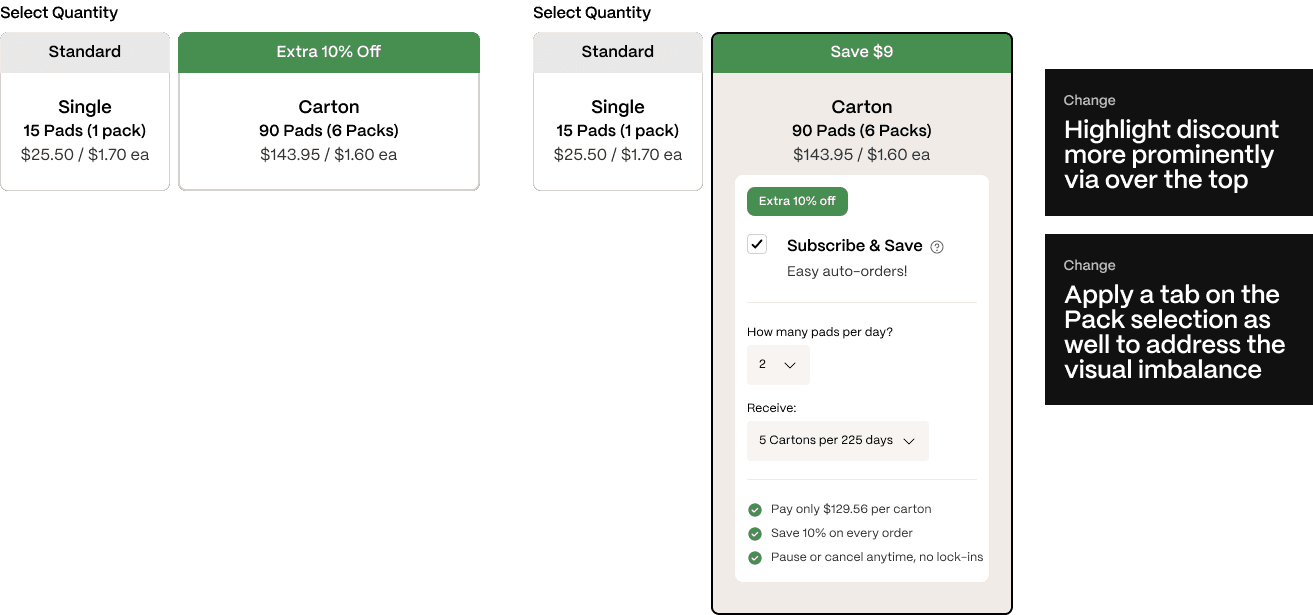
Selection state on carton is also imbalance - it is not scalable
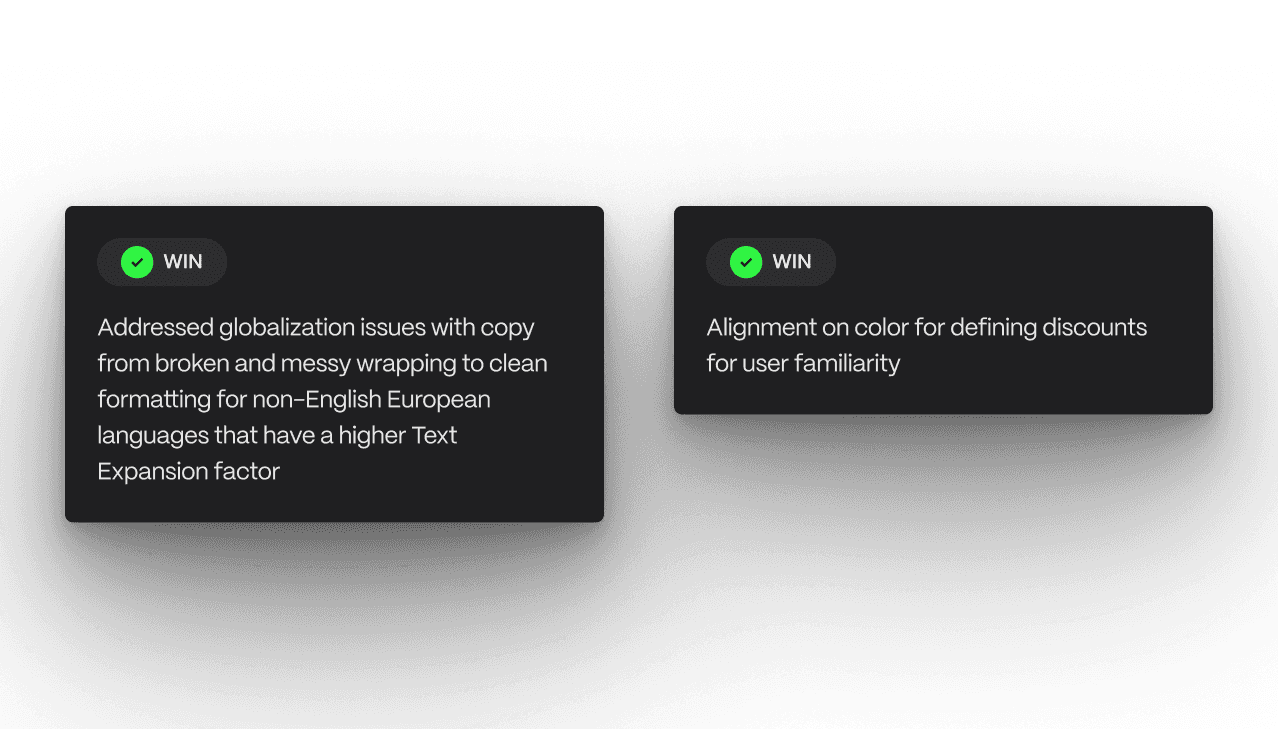
Discount text can not scale if text is longer
Minimizes cognitive load for users to to calculate percentage discount
The discount has more meaning to users and is more transparent than vague numbers
Is visually clear and establishes visual balance across the containers
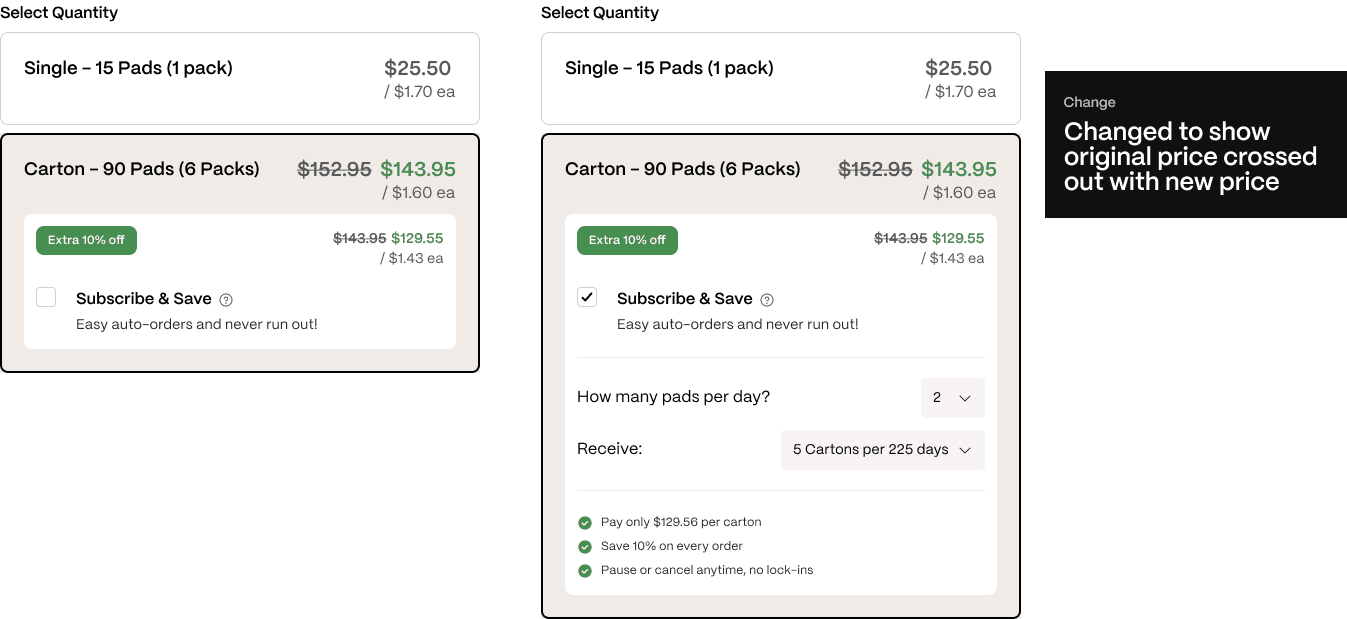
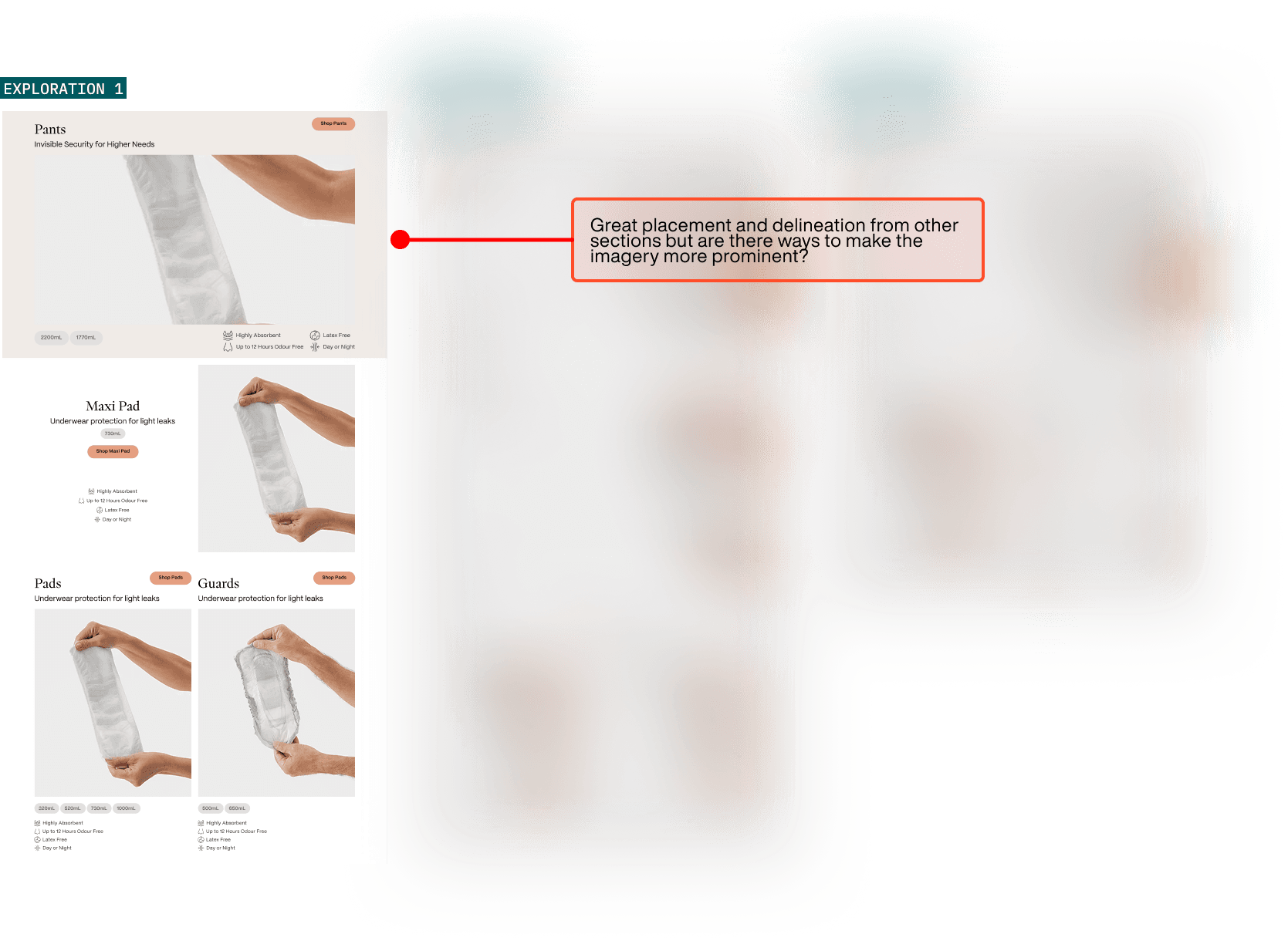
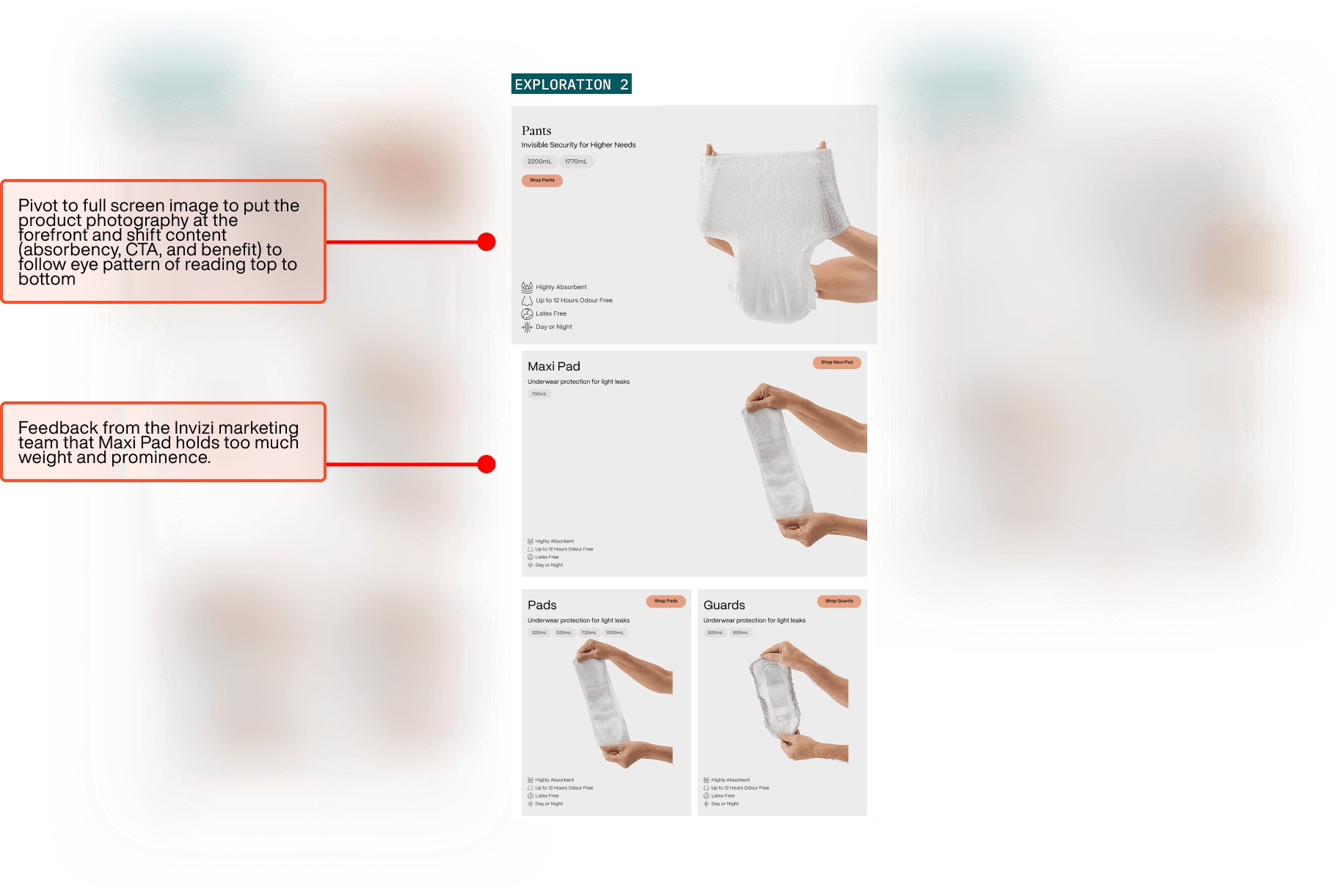
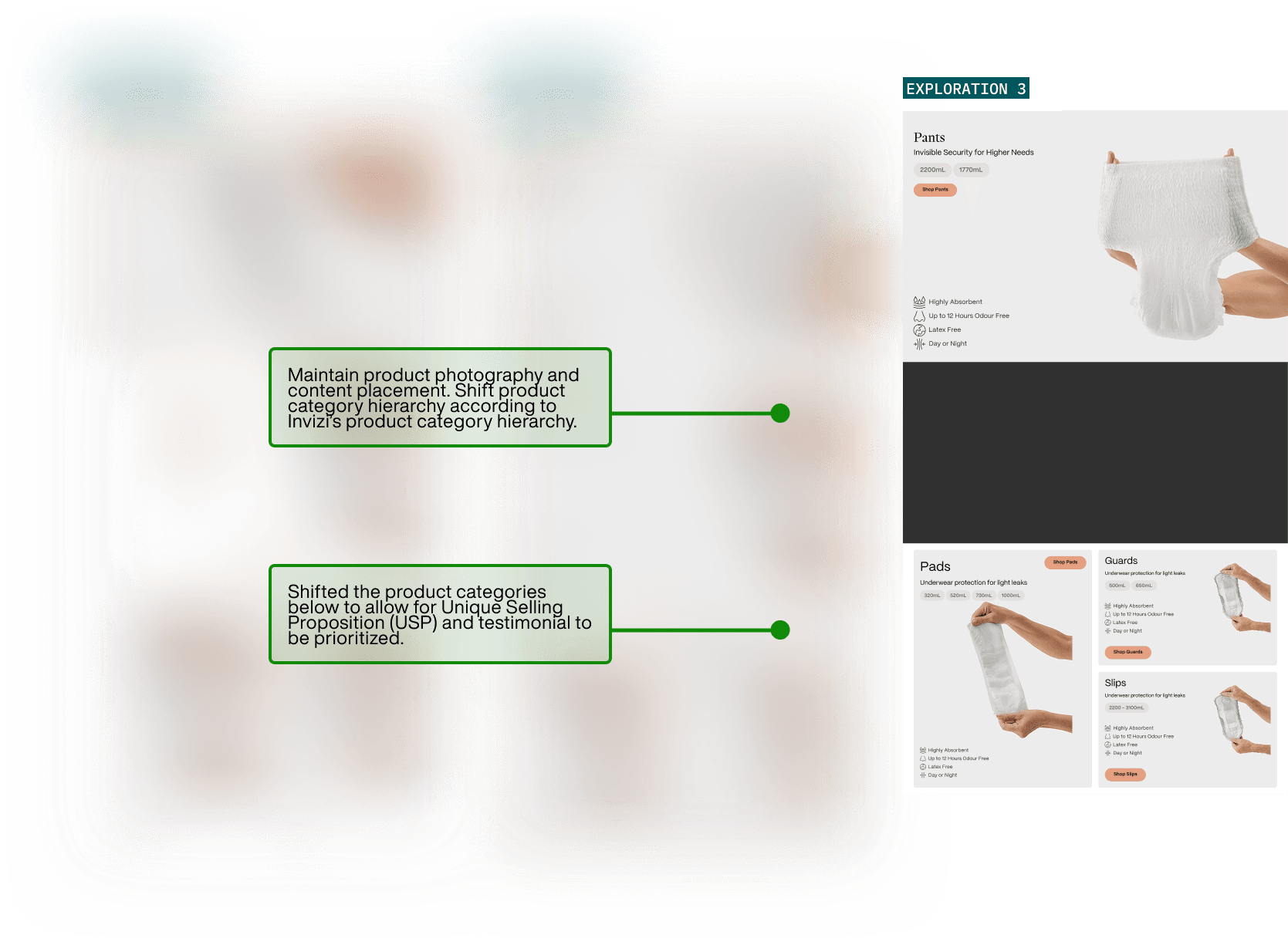
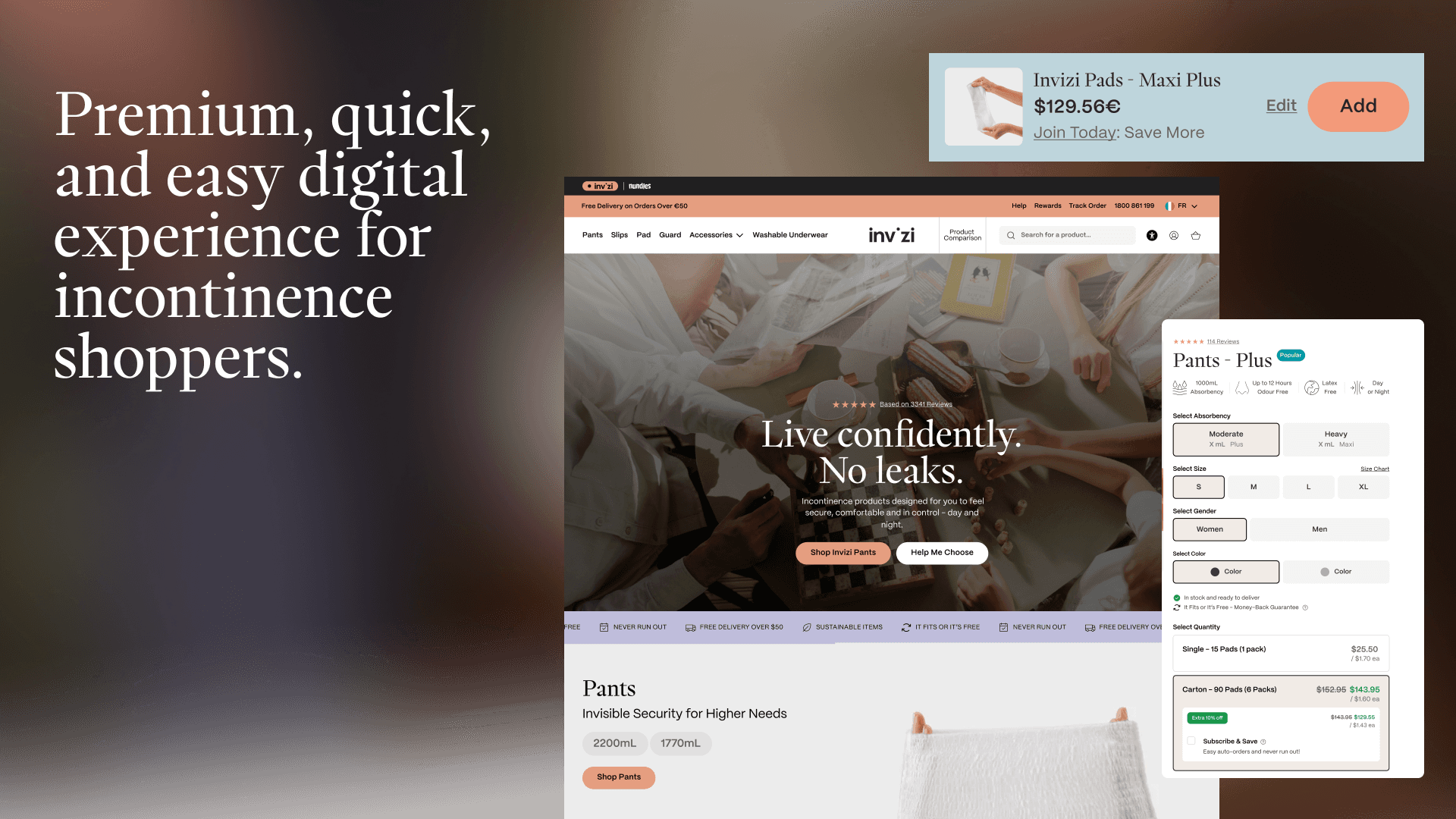
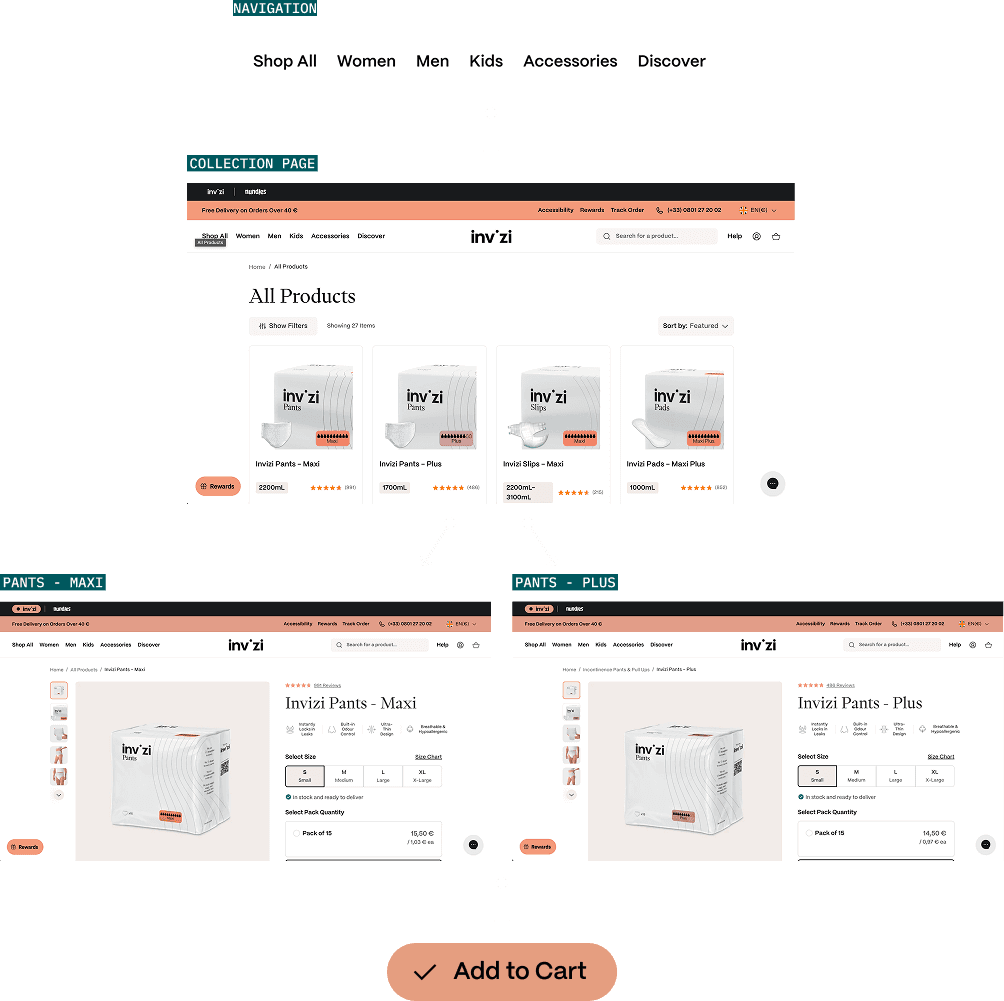
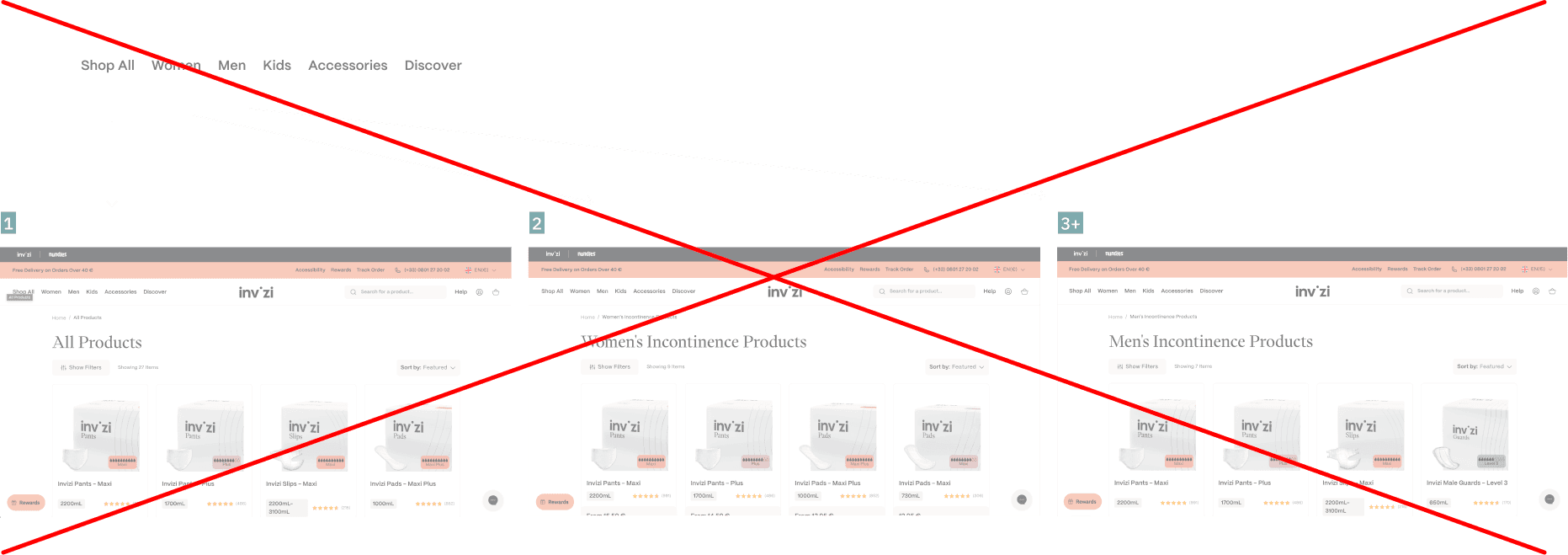
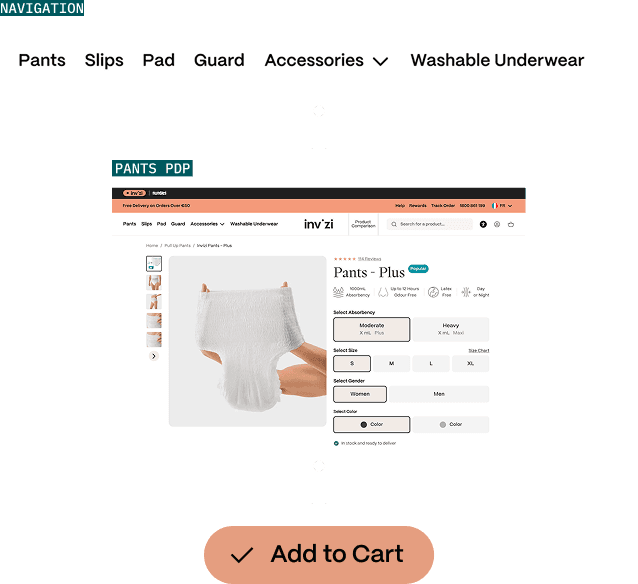
Later, from team workshops, the overall brand strategy is to position Invizi as a specialist in Pants and their hero product. This presents an opportunity to consider how the products show up on their website.
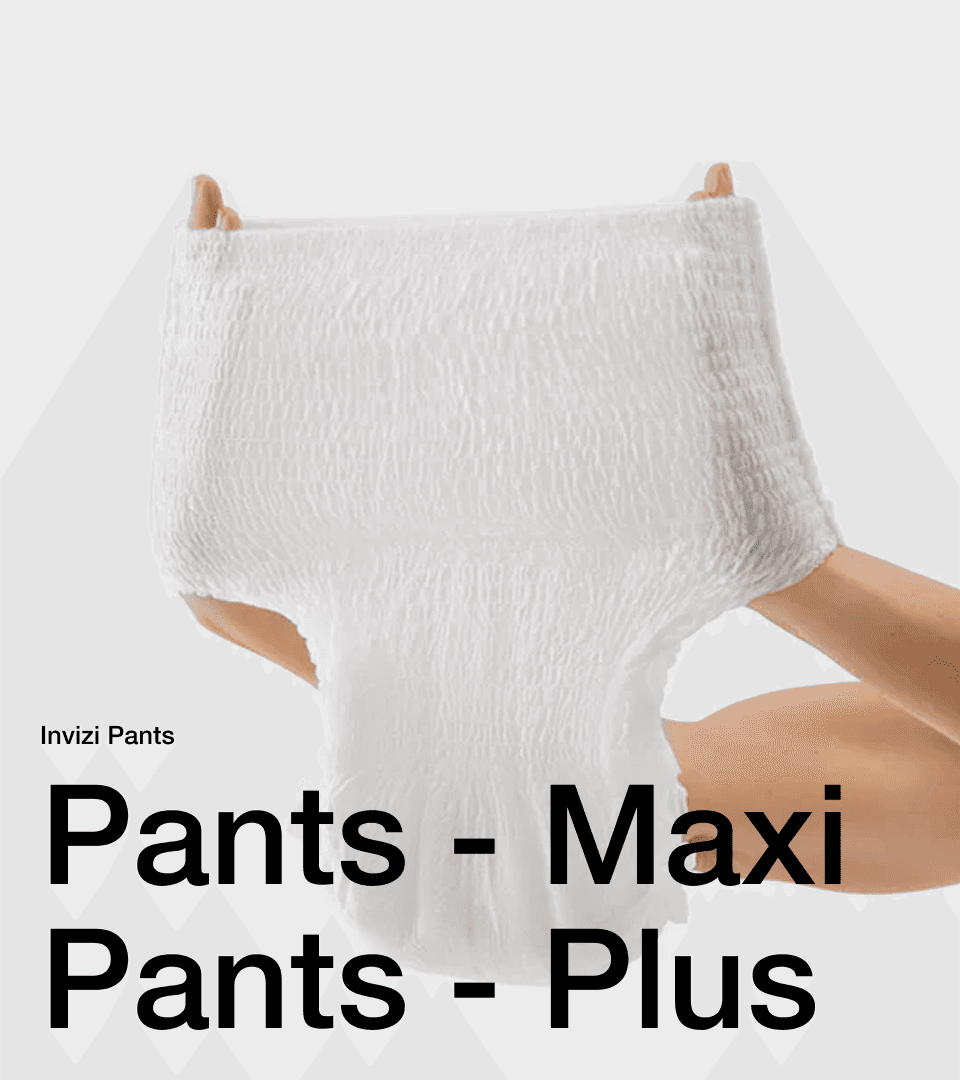
I explored how the Pants show up on the homepage.

REFLECTIONS